Inside the process
How this equipment works
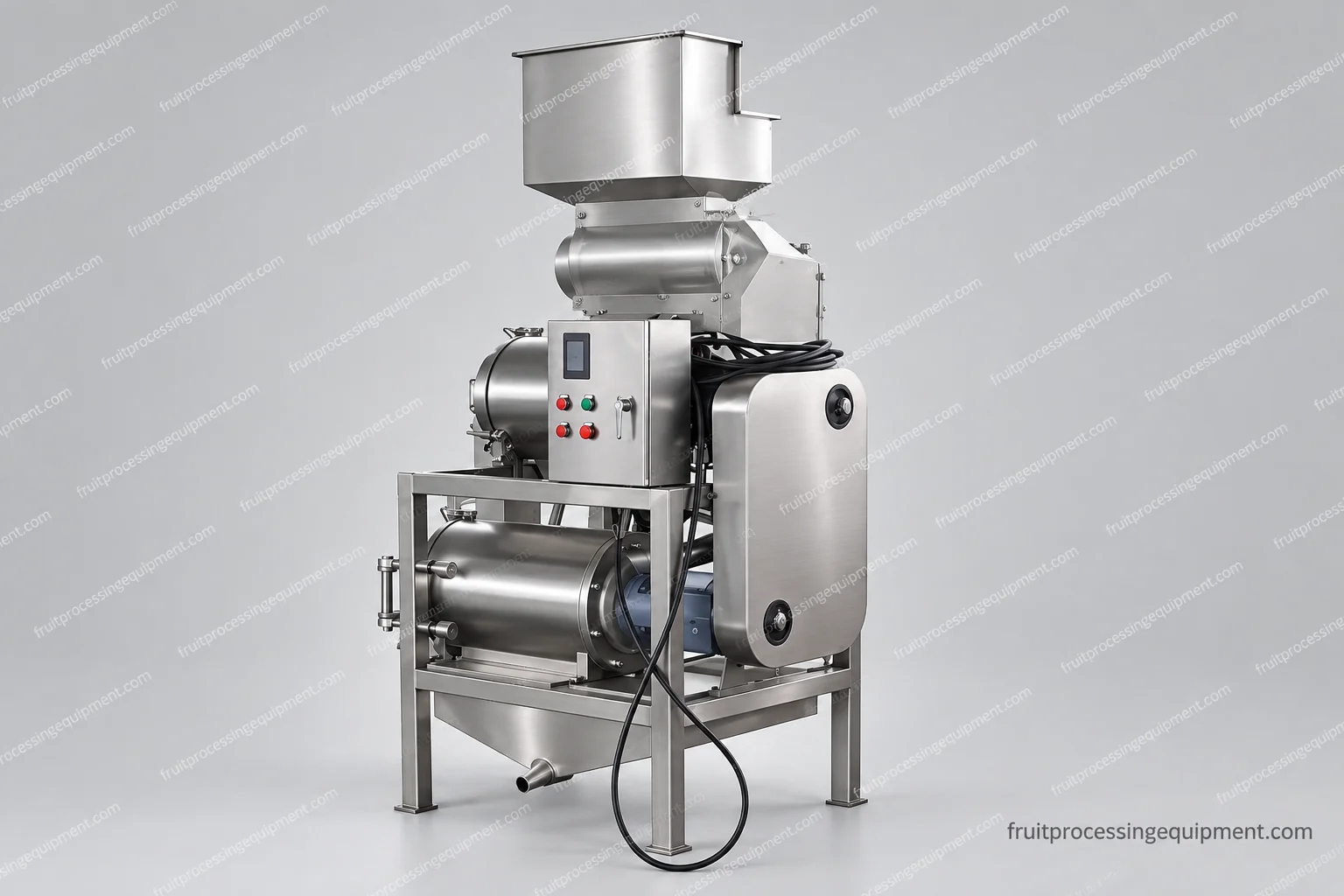
Prepared fruit enters the first working cylinder. The rotating assembly moves edible pulp through a selected screen while larger unwanted fractions leave through the reject path. The second stage refines the recovered stream to the required texture. Separate drives and screen choices allow the two stages to perform different duties.
Two working stages on one frame
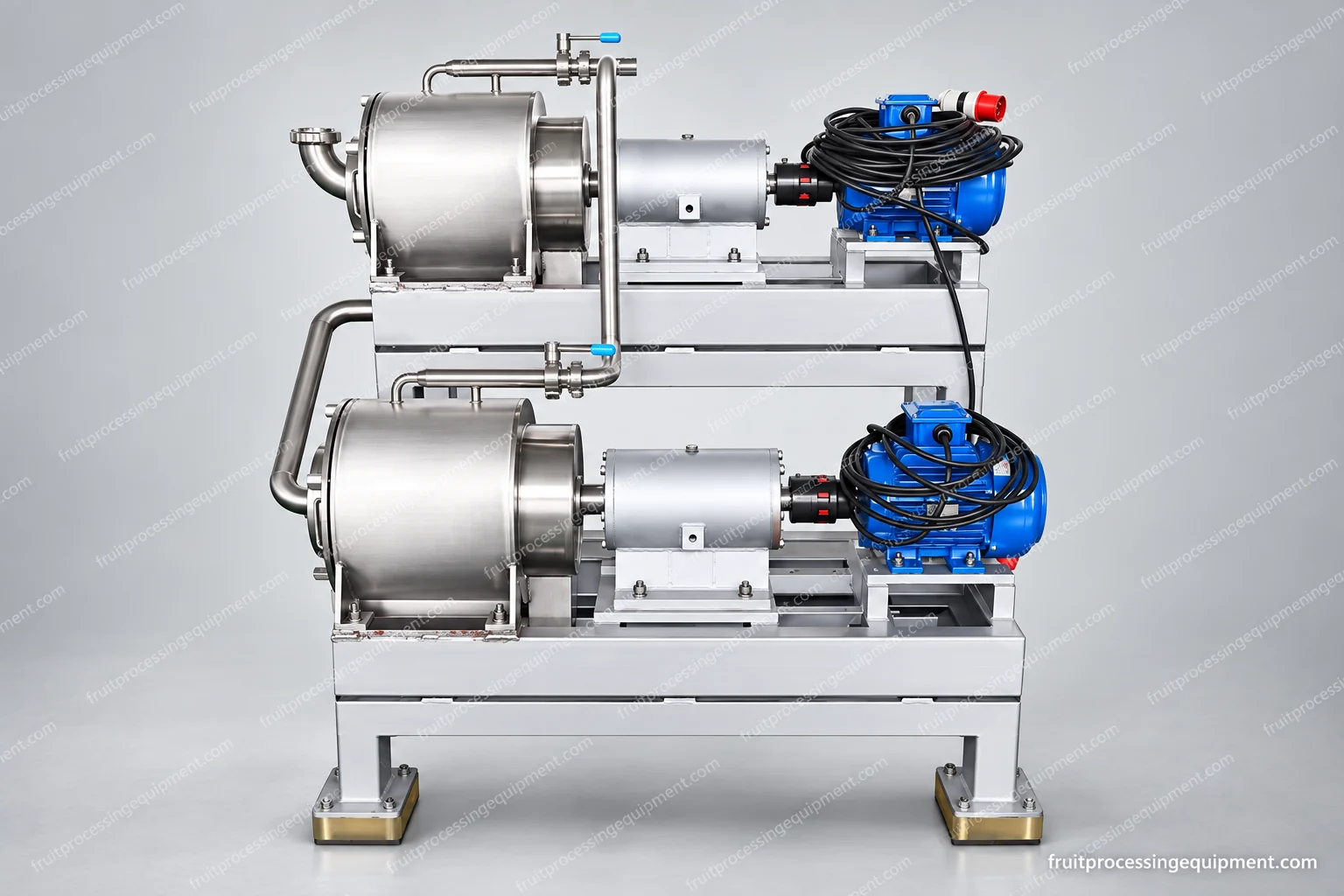
The pictured machine has an upper and lower processing cylinder, each with its own motor and coupling. This arrangement brings primary recovery and finishing together while retaining access to each housing. The final screen combination follows the fruit and the intended pulp texture.
Product and reject balance
Recovered pulp and rejected peel, seeds or coarse fibre must be assessed together. A finer screen may alter texture, pressure on the working surface and product loss; the smallest opening is not automatically the best choice.
Screen and rotor access
The cylinder end sections provide the access needed to inspect and service the contact assembly. Stop and isolate the drives before opening. Check screen condition, seals and trapped fibre when changing products or reassembling the machine.
Configuration and operating basis
Physical arrangement
Two cylindrical working stages on a shared frame
Drive arrangement
A separate motor and coupling for each stage
Separation setup
Screen and rotor configuration selected for the fruit
Material outputs
Finished pulp plus controlled reject streams
The offered model and its installed options define final dimensions, services and rated duty.
DJ two-stage series references
| Model | Reference feed rate | Listed drive power |
|---|---|---|
| DJ-3 | 1–3 t/h | 4.0 × 2 kW |
| DJ-5 | 5 t/h | 7.5 × 2 kW |
| DJ-10 | 10 t/h | 18.5 × 2 kW |
| DJ-15 | 15 t/h | 30 + 18.5 kW |
| DJ-25 | 25 t/h | 45 + 37 kW |
The published screen range is 0.4–1.5 mm. Screen choice and actual feed determine the finished texture and operating duty. Series values are references; the pictured two-stage assembly is not identified as one particular DJ size.
Product and operating conditions
Hard-stone handling needs the appropriate upstream separation. Finished texture and recovery depend on preparation and the selected screens.
Connections and installation
Define feed preparation, product outlet pressure or gravity path, reject discharge and downstream finisher/pump passages.
Cleaning and service access
Plan rotor isolation, screen removal, seal inspection and access to retained fibre or product behind working parts.
Selection and comparison
Pulping and pressing recover different wanted fractions. Compare their roles, not an unexplained litres-versus-kilograms capacity ranking.
Compare equipment functions →