Inside the process
How this equipment works
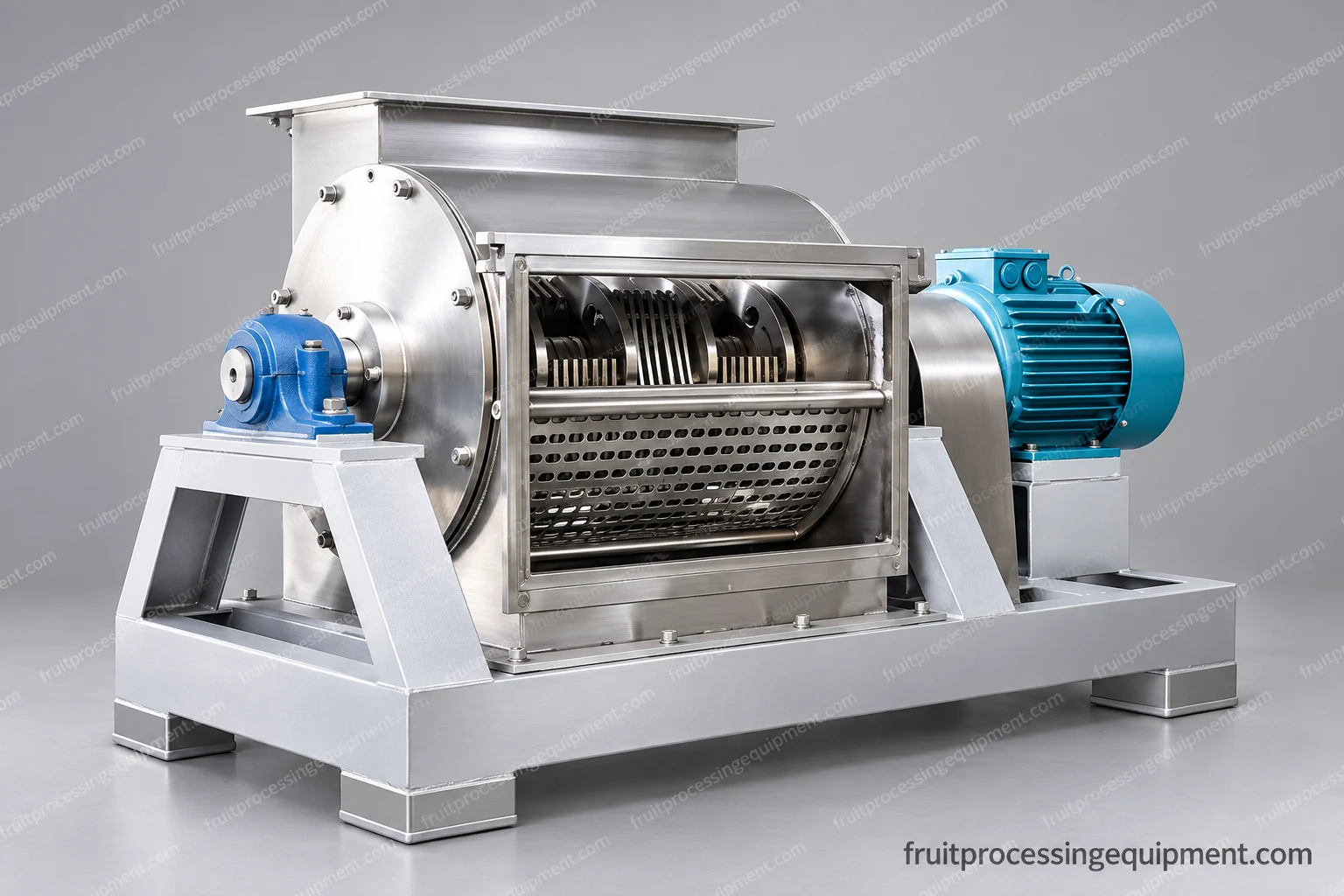
Fruit enters above the rotor and is worked against the chamber assembly. The rotor and perforated lower section shown in the equipment view define the mechanical processing zone; mash leaves beneath it for collection or transfer. The selected working parts and feed condition control the next machine’s loading.
Access to the working chamber
The equipment view shows the chamber opened for inspection, with the drive outside the product zone. Opening is a maintenance state: the covers and guards must be secured before operation. Access allows the rotor, screen and contact surfaces to be inspected after cleaning.
Mash for the next machine
A pressing route needs a mash that releases liquid without blinding the drainage medium. A pulping route needs feed that enters the screen assembly evenly. Crushing is therefore matched to the following recovery step and to the condition of the fruit.
Controlled feeding
The feed conveyor or hopper should maintain a steady layer rather than emptying large batches into the rotor. Foreign-object control and prior removal of incompatible hard stones protect the working parts and the finished product.
Configuration and operating basis
Machine structure
Upper hopper, enclosed rotor chamber and separate drive
Working-part access
Openable chamber for isolated inspection and cleaning
Product discharge
Mash collection below the working assembly
Selection basis
Prepared-fruit mass flow and required mash condition
The offered model and its installed options define final dimensions, services and rated duty.
PS series catalogue references
| Model | Reference feed rate | Motor power |
|---|---|---|
| PS-1 | 1 t/h | 2.2 kW |
| PS-5 | 5 t/h | 5.5 kW |
| PS-10 | 10 t/h | 11 kW |
| PS-15 | 15 t/h | 15 kW |
| PS-25 | 25 t/h | 22 kW |
The published series lists 1470 r/min. These are catalogue references for model selection; achieved feed rate depends on the fruit and working assembly. The equipment image does not identify an individual PS size.
Product and operating conditions
This machine reduces fruit size. It does not separate hard stones or turn every raw fruit directly into finished puree.
Connections and installation
Check controlled feeding, mash discharge, peak rate, transfer residence and the receiving press or pulper restrictions.
Cleaning and service access
Provide safe rotor isolation, removable cutting parts and documented wear inspection; confirm contact materials and clean-out access.
Selection and comparison
Compare offered crushers using matched fruit, mash criteria and downstream results. Cross-task presses only explain the next role.
Compare equipment functions →