Inside the process
How this equipment works
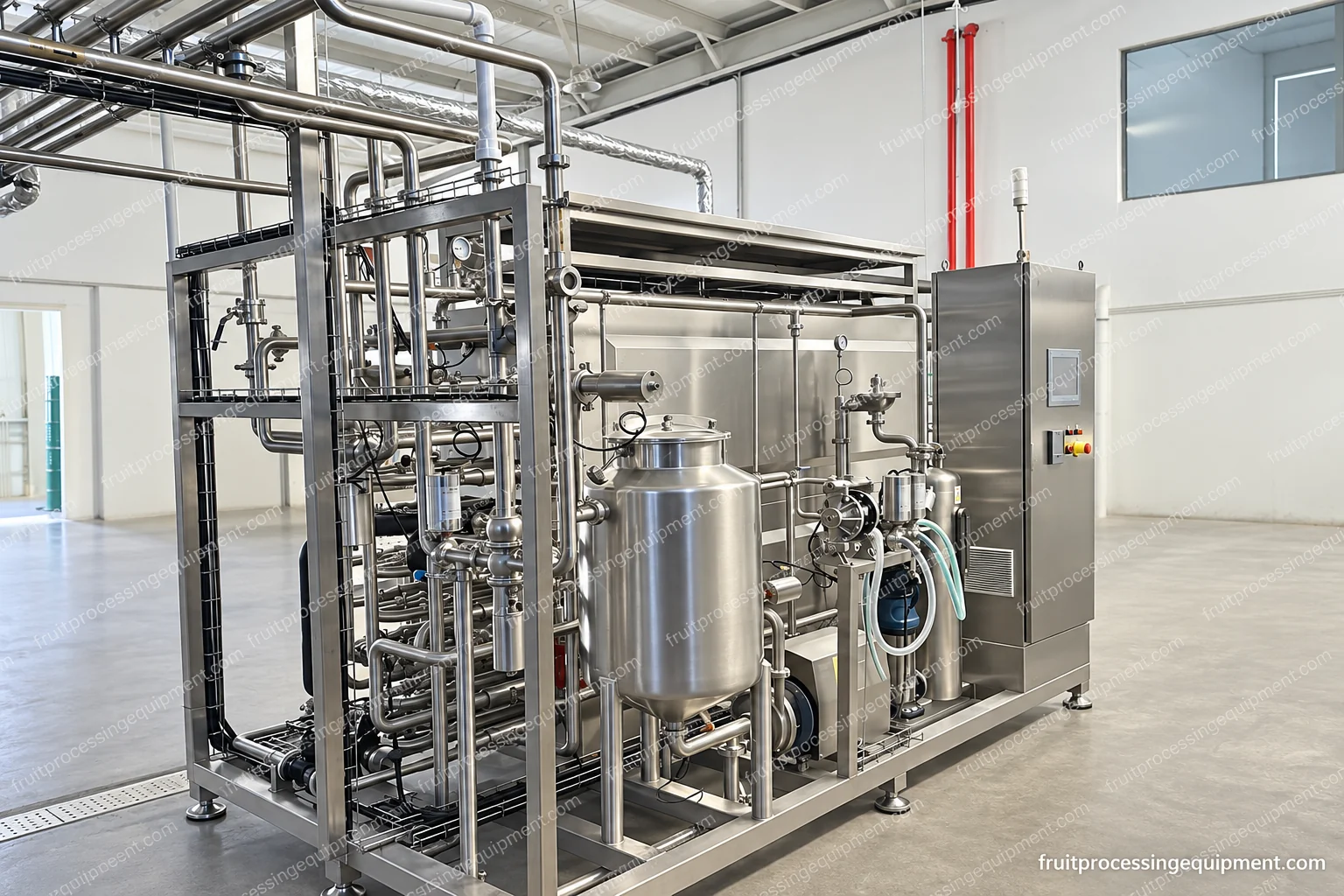
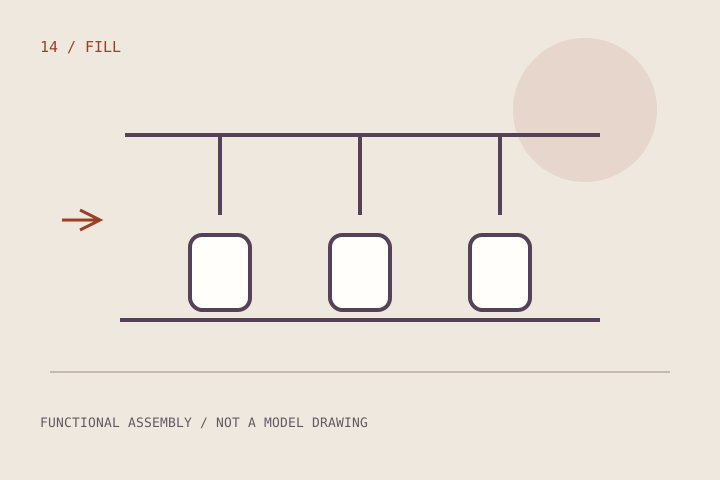
A product tank receives the recovered or treated stream and provides a defined working inventory. The connected pump feeds the next operation against the actual pipe resistance and elevation. Level response and downstream permissives coordinate the tank with the receiving machine.
Vessels and service access
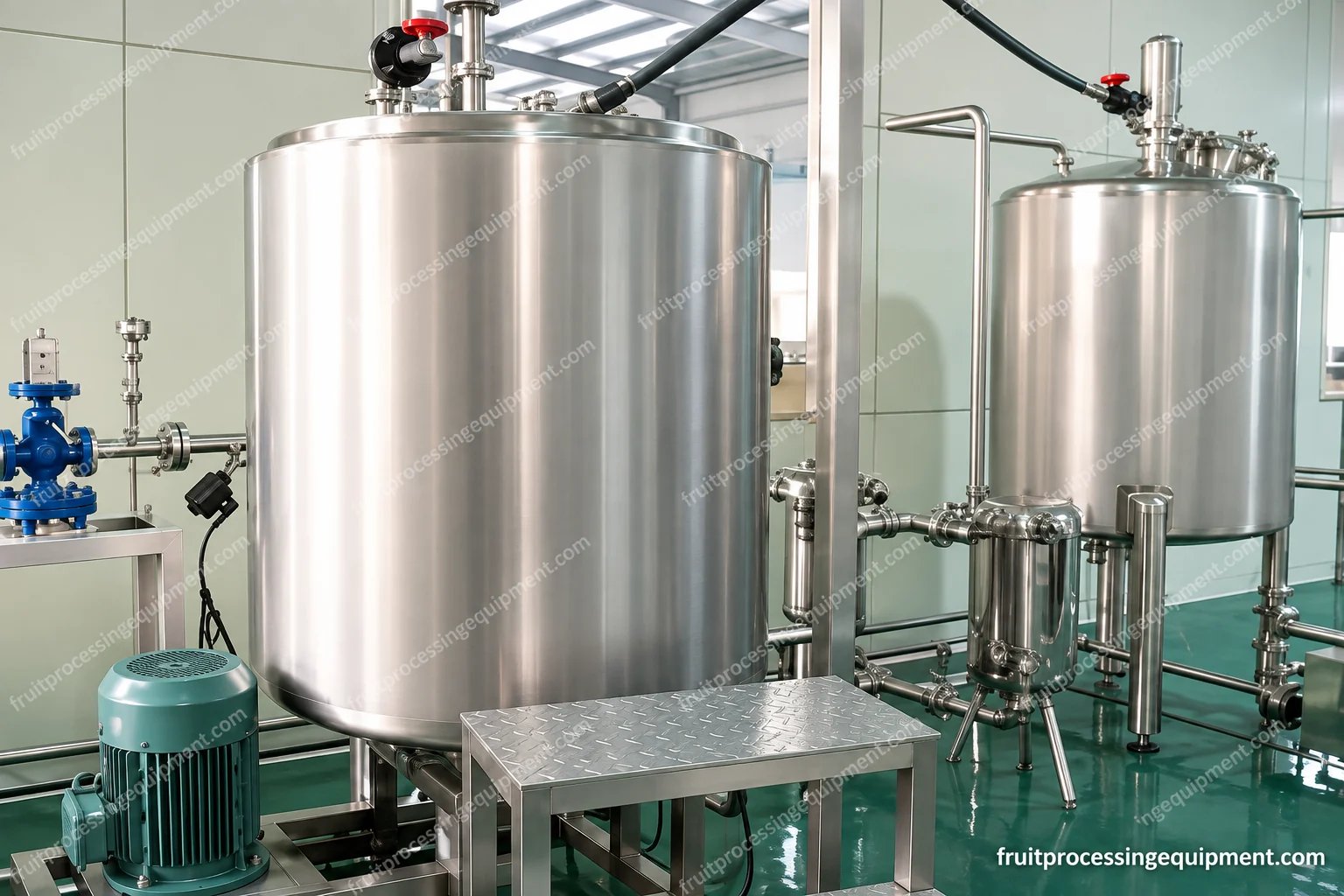
The equipment arrangement shows upright tanks with top fittings, lower connections and an access platform. Product-contact volume, available working volume and service clearance are separate installation quantities.
Mixing as a selected configuration
A fruit base that needs suspended pulp or ingredients kept uniform may require an agitator and a suitable tank bottom. A buffer that simply decouples short machine interruptions has a different task. Specify mixing, heating or cooling only where required by the product.
Pump duty and product handling
Thin juice and viscous pulp can need different pump types and passage sizes. The offered pump is selected from product temperature, particles, inlet conditions and system head. Its output must remain compatible with the thermal unit or filler.
Configuration and operating basis
System components
Product tanks, sanitary pipework and connected pump(s)
Capacity definition
Nominal vessel volume and usable working inventory
Process options
Mixing and temperature conditioning where required
Control relationship
Tank level and downstream feed permissives
The offered model and its installed options define final dimensions, services and rated duty.
Product and operating conditions
Cannot remove a sustained bottleneck or provide preservation simply by storing product.
Connections and installation
Identify product/return lines, sensors, pump/valve control ownership and the receiving machine limits.
Cleaning and service access
Check seal access, drainability, instrument service and safe pressure release; validate the full product-contact cleaning path.
Selection and comparison
Compare equivalent transfer offers on the same product and system curve, not tank volume alone.
Compare equipment functions →