Wash & sort
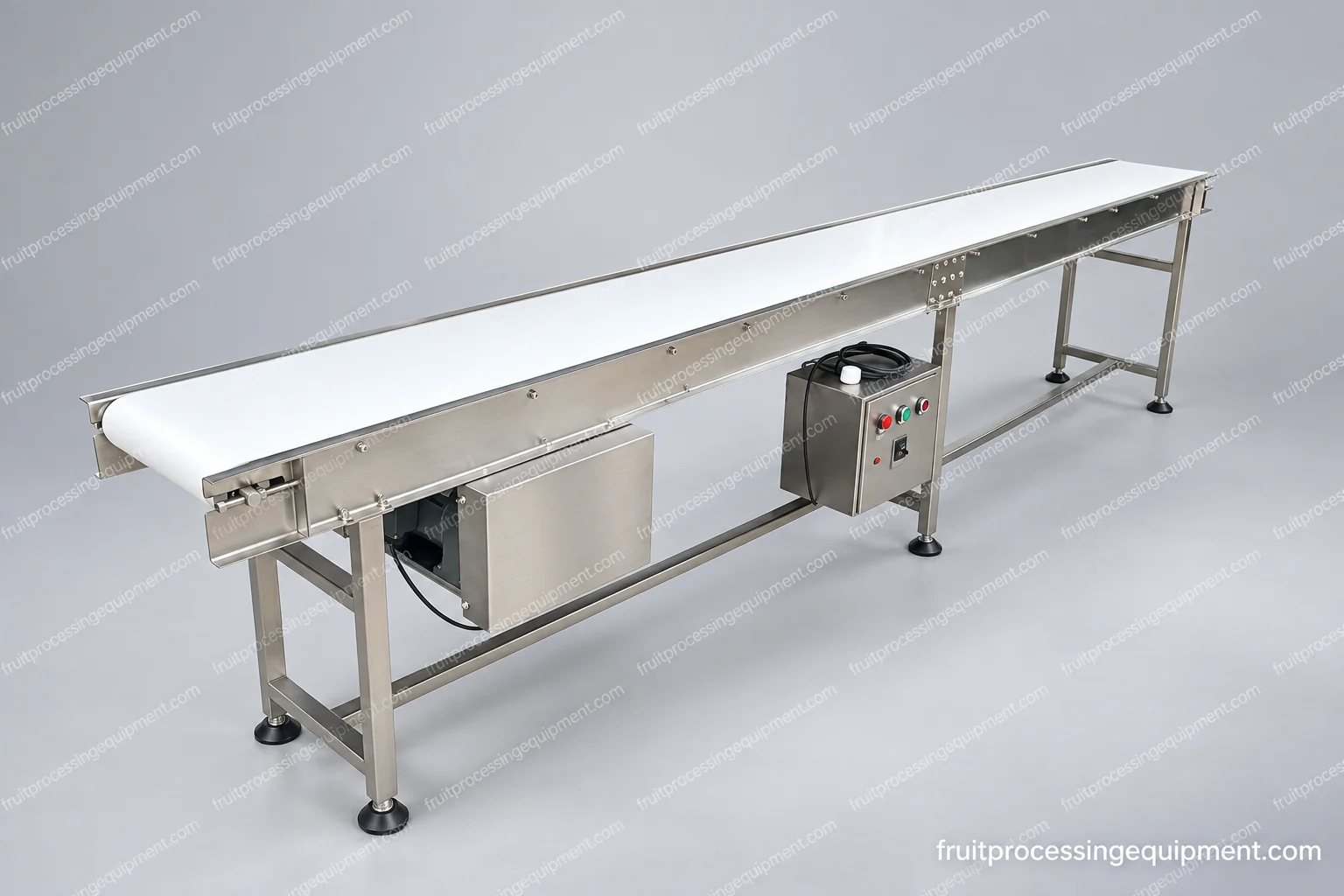
Fruit Inspection and Transfer Conveyor
A powered belt on an open support frame moves whole fruit or prepared pieces between reception, inspection and processing.
Continuous belt transfer with accessible inspection edges
Combine fruit preparation and the right recovery method with clarification, air control and product treatment where the juice specification requires them.
Material boundary
Connected operations
The conveyor sets the presentation into washing and inspection. Firm fruit can use the brush and spray arrangement; tender fruit needs a suitable gentler wash. The crusher prepares a mash only after incompatible stones, foreign material and damaged fruit have been addressed.
Firm-fruit mash may be pressed to recover liquid, while other fruits require different flesh, peel or seed handling. Belt and batch pressing are compared as recovery configurations. Their required mash and product quality are defined before a complete machine selection. Pulping is used where the edible pulp belongs in the product.
A centrifugal clarification stage reduces suspended material for a clarified product. A cloudy juice may retain part of that fraction and need a different separation setting. Air removal can be positioned before thermal treatment, with closed transfer after the deaerator to limit re-entry.
The thermal system and the packaging route share the product-temperature, holding and hygienic requirements. Cold storage, hot filling and aseptic transfer are different operating arrangements. The treatment duty is selected for the actual juice and package rather than applied as one universal schedule.
Compare continuous belt pressing with batch pressure extraction for the prepared mash. These configuration pages explain the recovery methods and interfaces; they do not identify a photographed press model.
Use raw-fruit kg/h for reception and preparation, then record juice L/h at a defined temperature for liquid equipment. Fruit losses, retained solids and any water addition explain the relationship between the two streams. Pump and tank sizing follows the actual intermediate, not the raw-fruit nameplate.
The equipment list identifies the machines, product connections and services included in supply. Existing preparation, storage or packaging equipment can be retained where the interface requirements are compatible.
Machines in this route
Wash & sort
A powered belt on an open support frame moves whole fruit or prepared pieces between reception, inspection and processing.
Continuous belt transfer with accessible inspection edges
Wash & sort
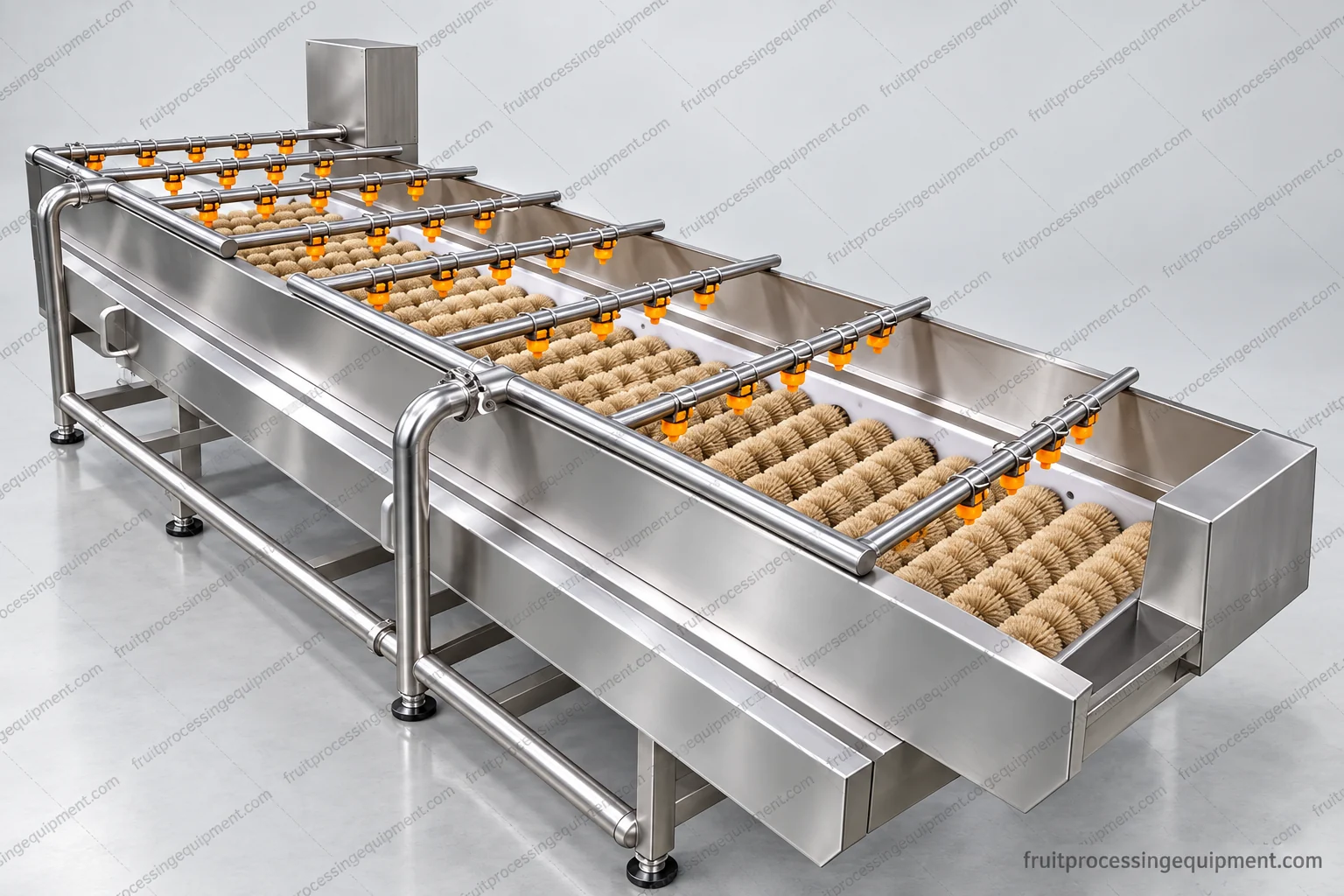
A continuous washer with exposed brush rollers and overhead spray bars for cleaning firm produce before preparation.
Rotating brushes with overhead rinsing
Size & destone
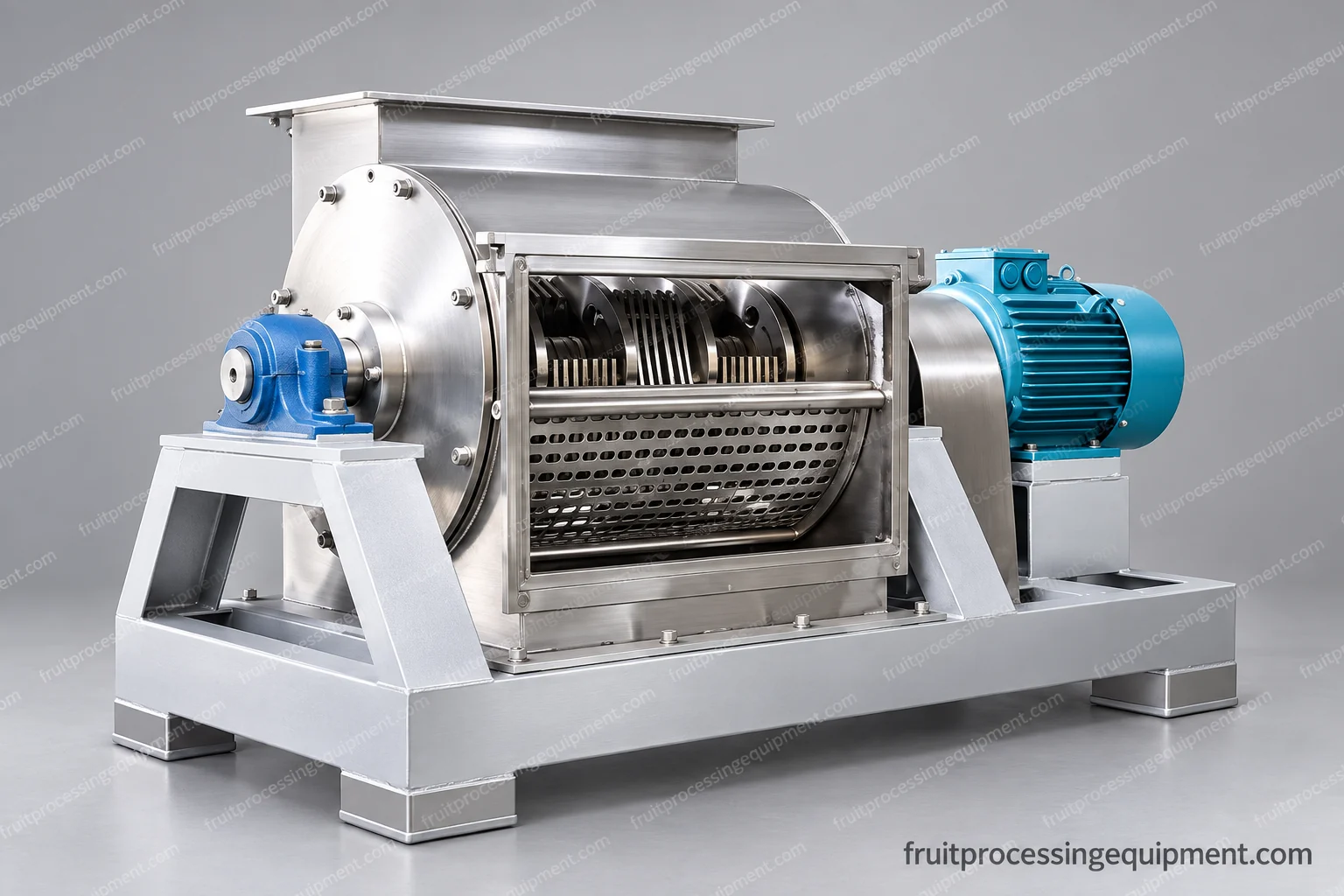
A hopper-fed rotor machine that breaks prepared fruit into mash for pulping or juice recovery.
Driven rotor inside an accessible crushing chamber
Finish & clarify
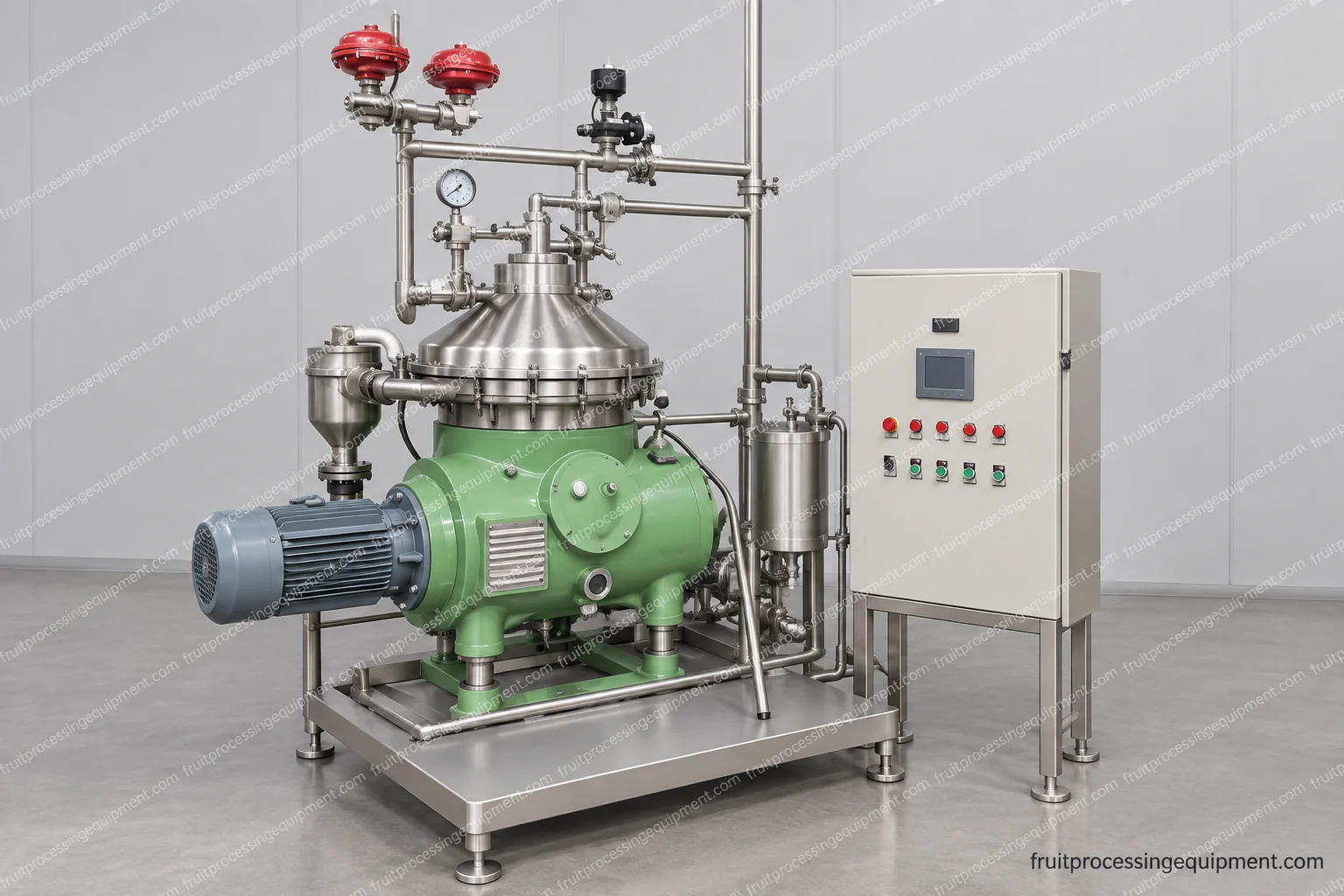
A driven centrifugal separator with a closed bowl and connected pipework for removing fine suspended matter from extracted juice.
Centrifugal separation in a disc-stack bowl
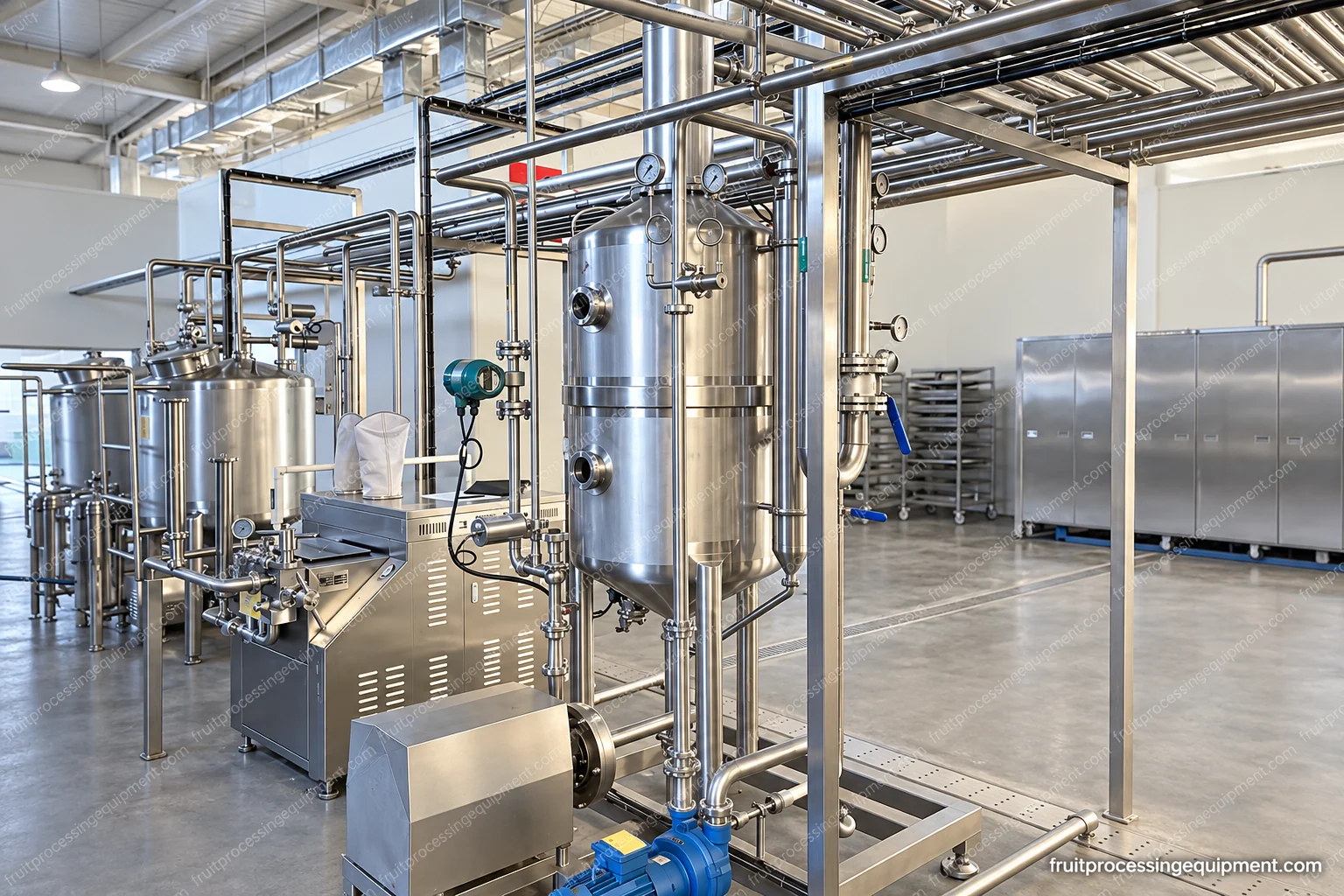
Transfer & balance
A vacuum-vessel assembly with sight windows, connected piping and a discharge pump for managing entrained and dissolved air.
Air release in a vacuum vessel with controlled product transfer
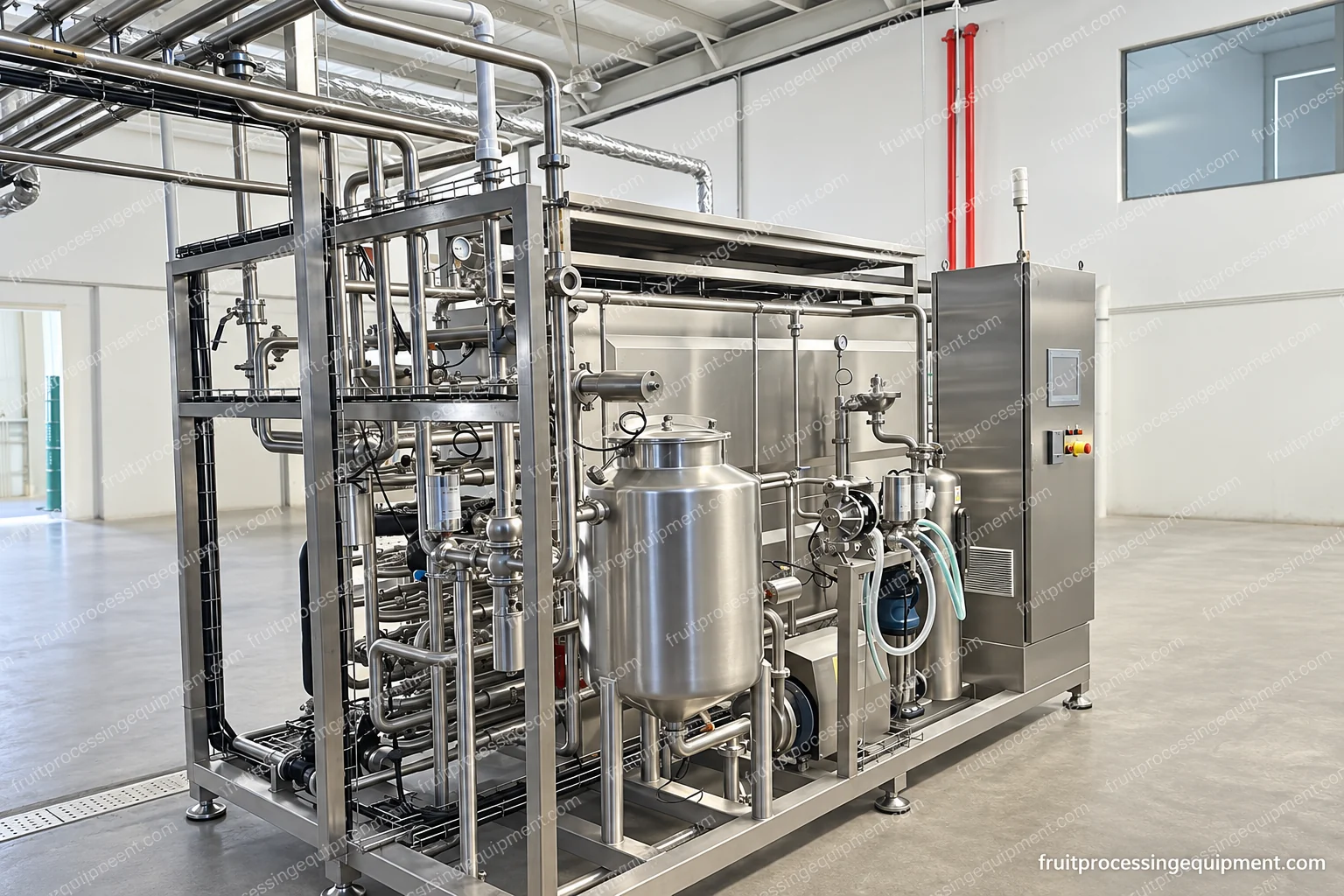
Treat the product
A skid-mounted heating, holding and cooling arrangement with product vessels, tube sections, valves and local controls.
Continuous indirect product heat treatment
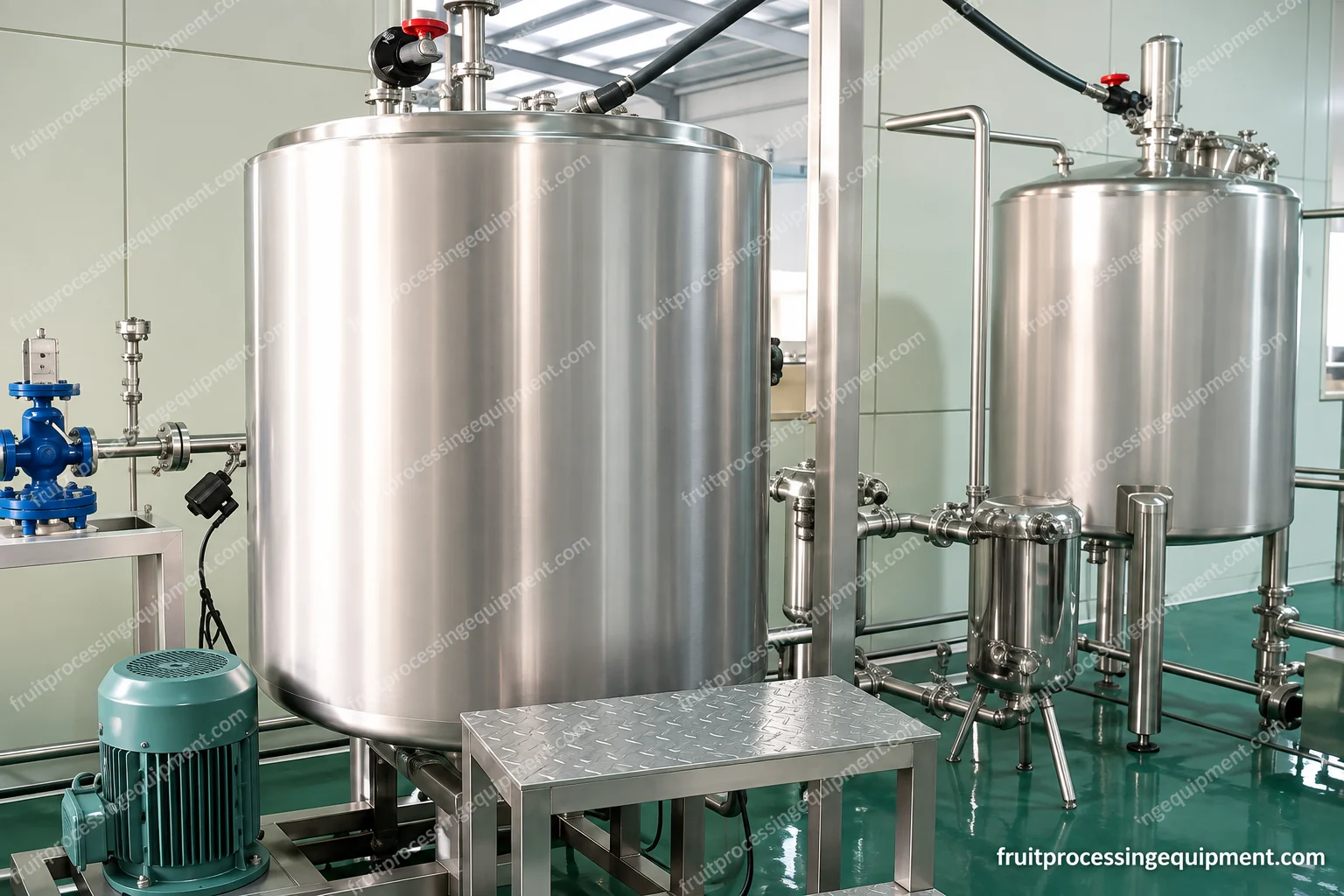
Transfer & balance
Product vessels, accessible pipe connections and transfer pumps form a controlled buffer between fruit-processing machines.
Product holding and pumped transfer
Review the product handoffs, controls, utilities and cleaning circuits alongside the machine selection.