Inside the process
How this equipment works
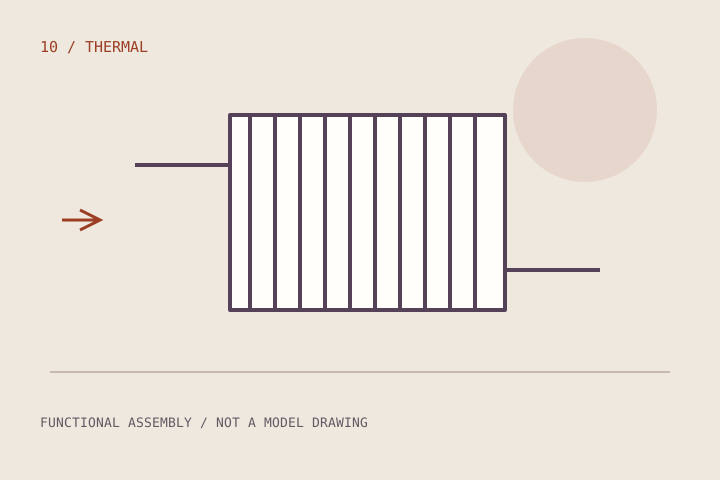
A controlled product feed passes through the heating path, a selected holding section and the cooling arrangement before downstream transfer. Heat moves across the exchanger wall, keeping the product path separate from its heating or cooling service. The pump, residence path and measured temperature form one operating system.
A connected processing skid
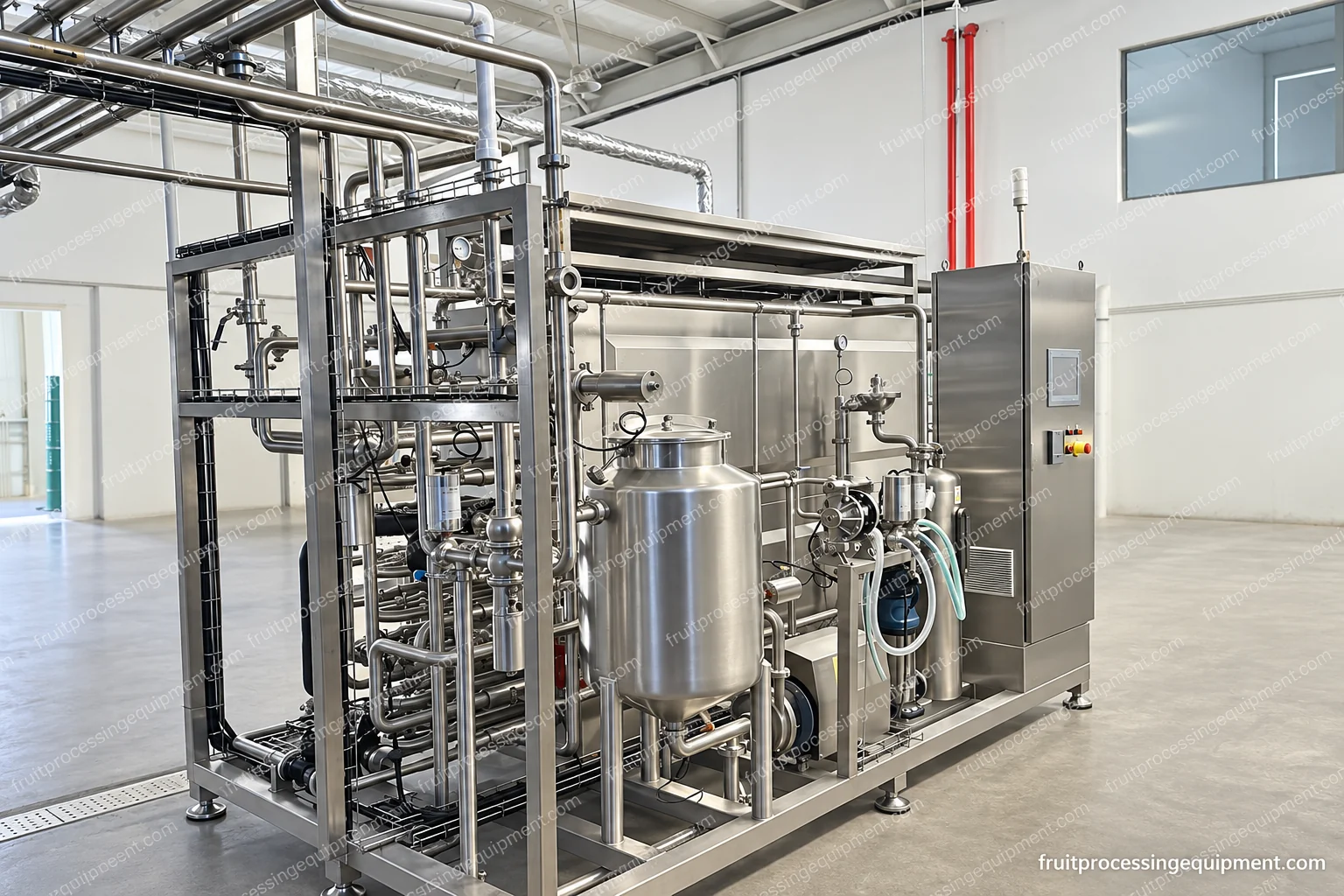
The equipment view shows tubular runs above and alongside a feed vessel, valve stations and a control enclosure. Bringing these parts onto a skid makes the process connections visible and allows the installation to be reviewed as a connected assembly.
Holding and off-condition handling
Flow and holding-section volume jointly determine the residence history. Instrument positions, control response and routing of product during startup or an off-condition event belong to the chosen process arrangement. A temperature setpoint alone is not a finished-product validation.
From pasteurization to a selected UHT route
The thermal duty follows the actual product and downstream packaging system. A pulp route may need larger passages and different pumping from a thin juice. UHT operation and aseptic filling require the entire connected boundary to be specified together.
Configuration and operating basis
Process sections
Product feed, tubular heat exchange, holding and cooling
Physical format
Skid with connected vessels, piping and controls
Catalogue temperature family
72–150 °C, configured for the selected product duty
Catalogue holding-time family
15–120 seconds, with the corresponding flow and holding path
Product definition
Juice or pumpable pulp within the selected passage limits
Scope of the values
Tubular-system family references; not a rating assigned to the pictured skid or a universal treatment schedule
The offered model and its installed options define final dimensions, services and rated duty.
Product and operating conditions
A tubular label does not establish compatibility with every puree, commercial sterility or an aseptic receiving line.
Connections and installation
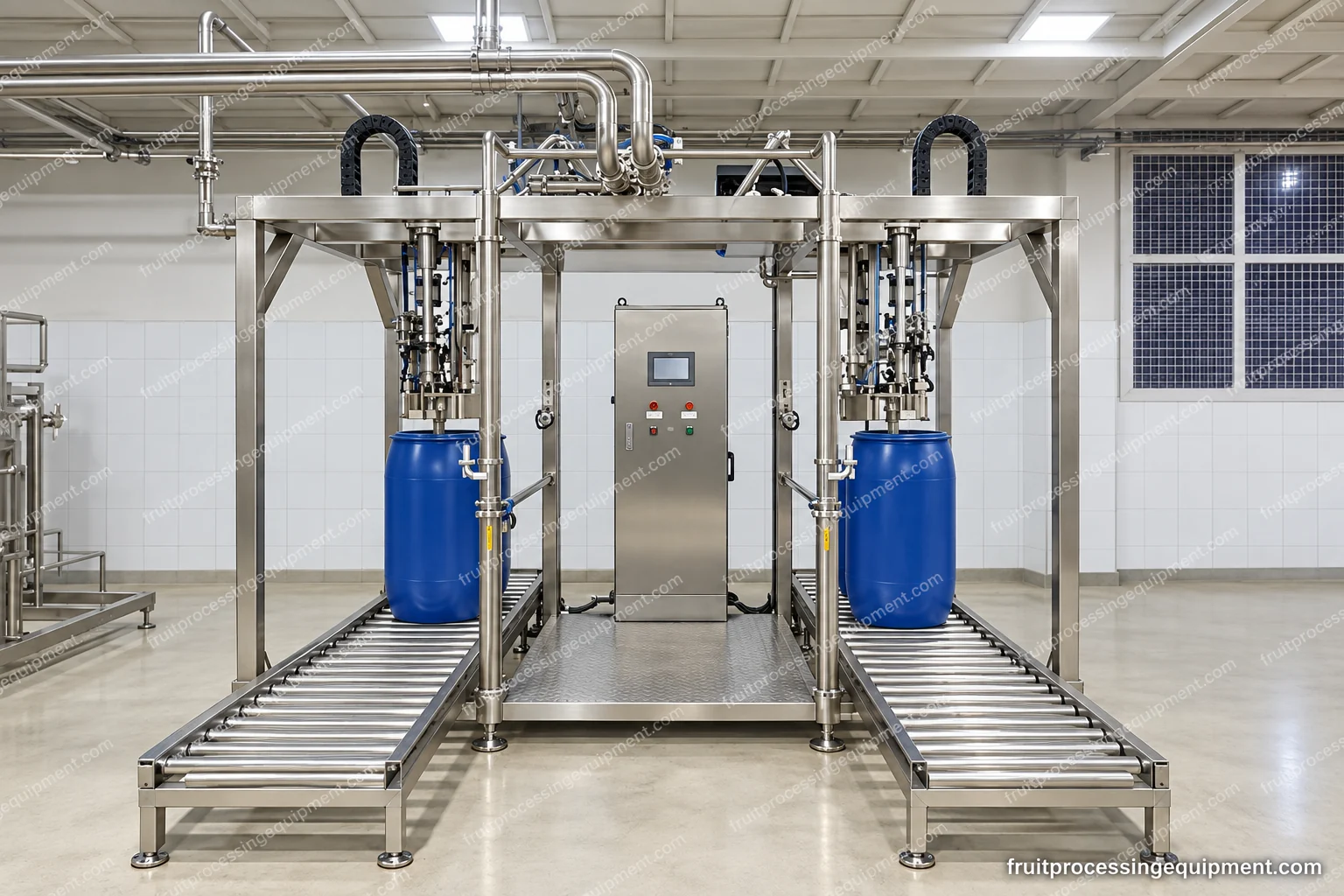
Confirm product pressure, return loops, utilities, controls and the exact connection to the filler or transfer system.
Cleaning and service access
Arrange inspection and service of tubes, seals and instruments with safe pressure/heat isolation and verified circuit cleaning.
Selection and comparison
Under shared liquid conditions, compare with a plate module by process duty and maintenance tradeoffs. For pulp outside a plate offer, mark the comparison as a scope mismatch.
Compare equipment functions →