Prepare
Destoning is a separate mechanical duty from crushing. The proposed assembly must show how flesh is recovered and how stones and fragments leave the product path. Manual trimming or peeling remains a different operation.
Stone fruit turns the preparation step into a quality boundary. Flesh recovery, stone integrity and the reject stream need to be defined before a crusher, pulper or press is treated as the next machine.
Fruit family · Stone fruit
Use the five stages below to turn the fruit description into a machine brief. The equipment list is a shortlist of duties to investigate, not a claim of model compatibility.
Destoning is a separate mechanical duty from crushing. The proposed assembly must show how flesh is recovered and how stones and fragments leave the product path. Manual trimming or peeling remains a different operation.
Pulping is often reviewed where edible flesh belongs in the product; pressing can be reviewed for a juice route after the preparation boundary. Compare the actual wanted fraction and reject quality, not a fruit-name match.
Pulp texture and retained fibre are set by the pulping and finishing arrangement. A clear-juice target needs a separate clarification decision. Stone fragments and peel carryover belong in the acceptance criteria.
Pumpable pulp and thin juice place different demands on passages, pumps and holding sections. The treatment route must be specified with the product condition at that machine, not the raw fruit condition.
A bulk bag or other package is selected with the product temperature, viscosity, particle content and upstream preservation boundary. Filling does not establish shelf life by itself.
Equipment to review
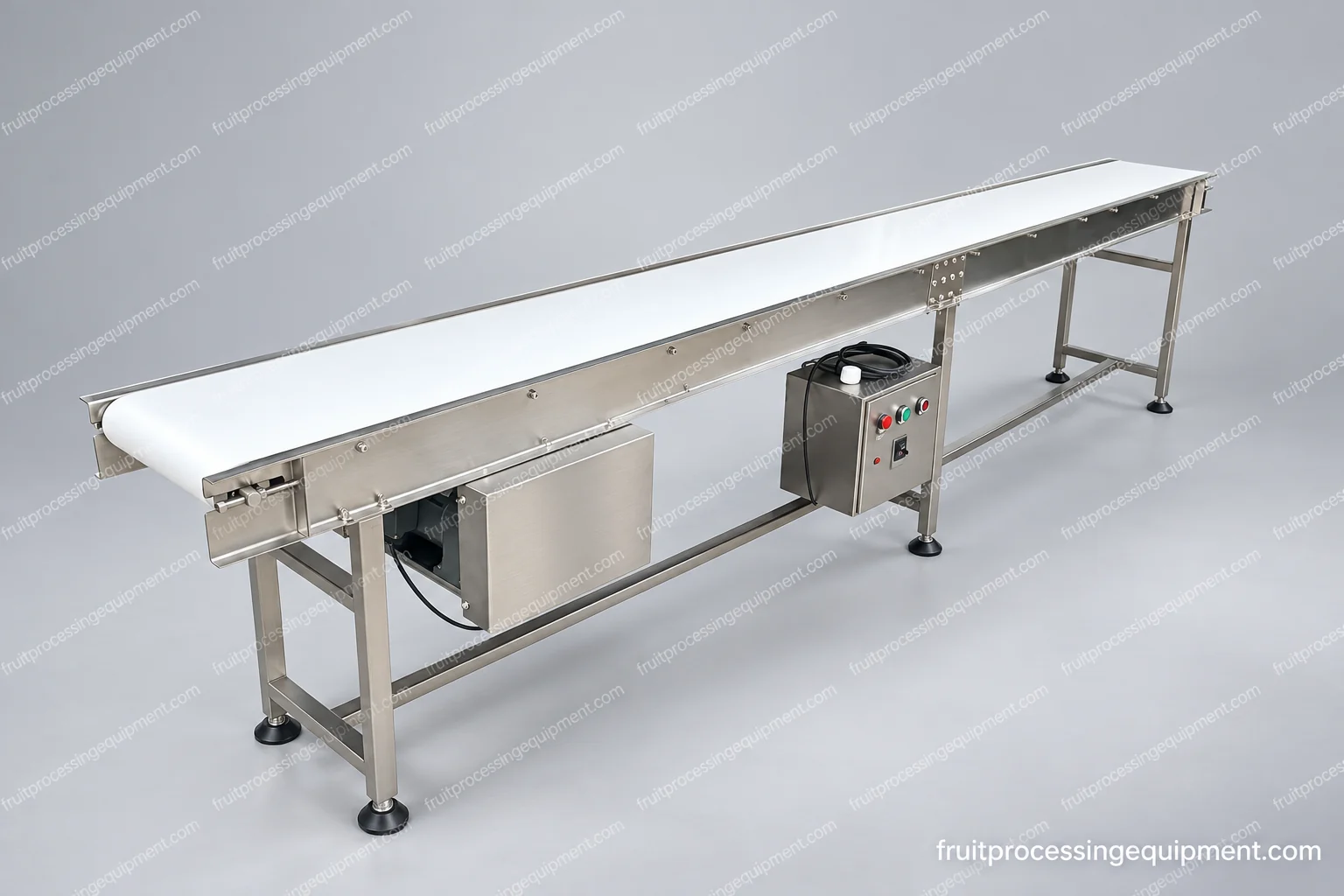
Wash & sort
A powered belt on an open support frame moves whole fruit or prepared pieces between reception, inspection and processing.
Continuous belt transfer with accessible inspection edges
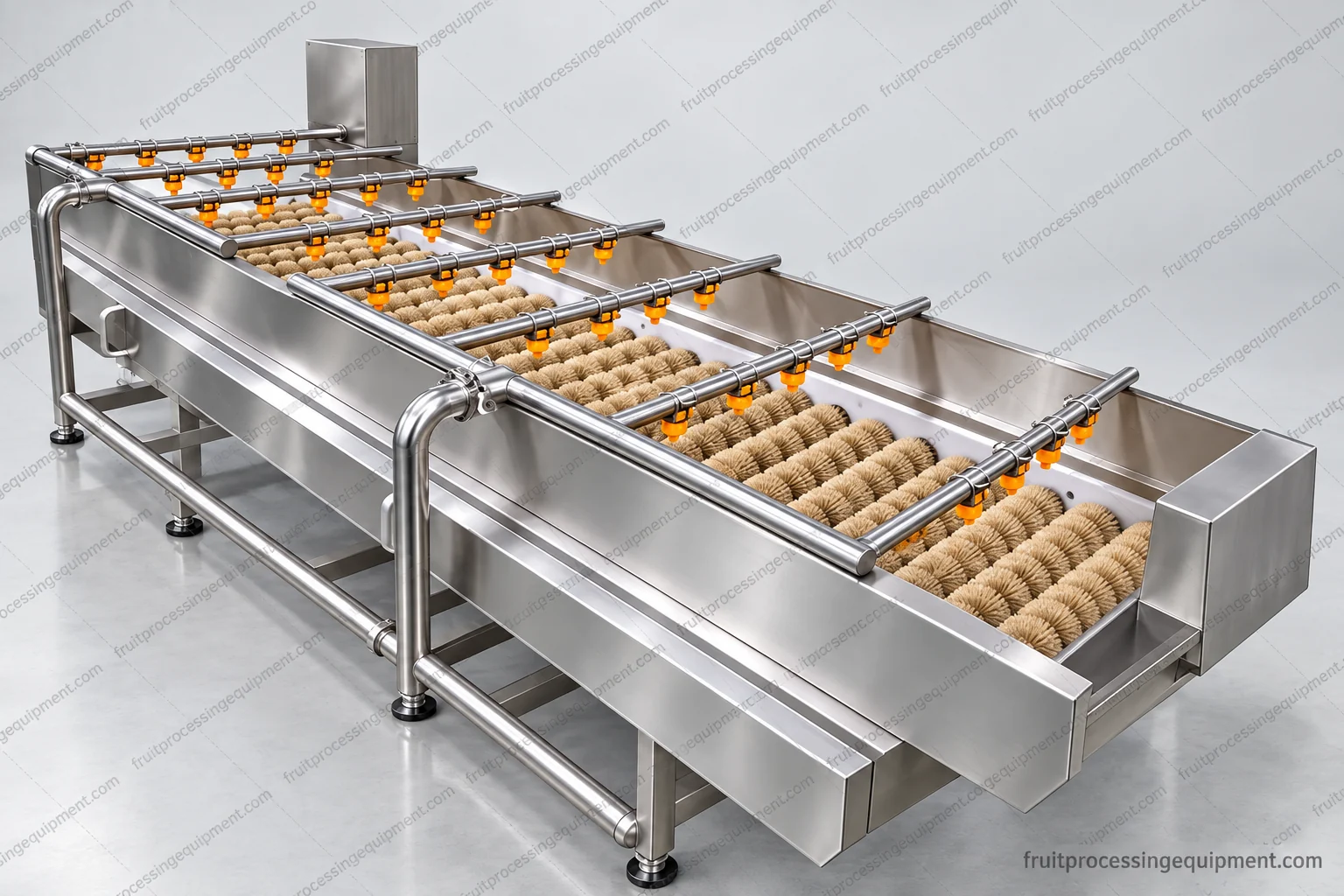
Wash & sort
A continuous washer with exposed brush rollers and overhead spray bars for cleaning firm produce before preparation.
Rotating brushes with overhead rinsing
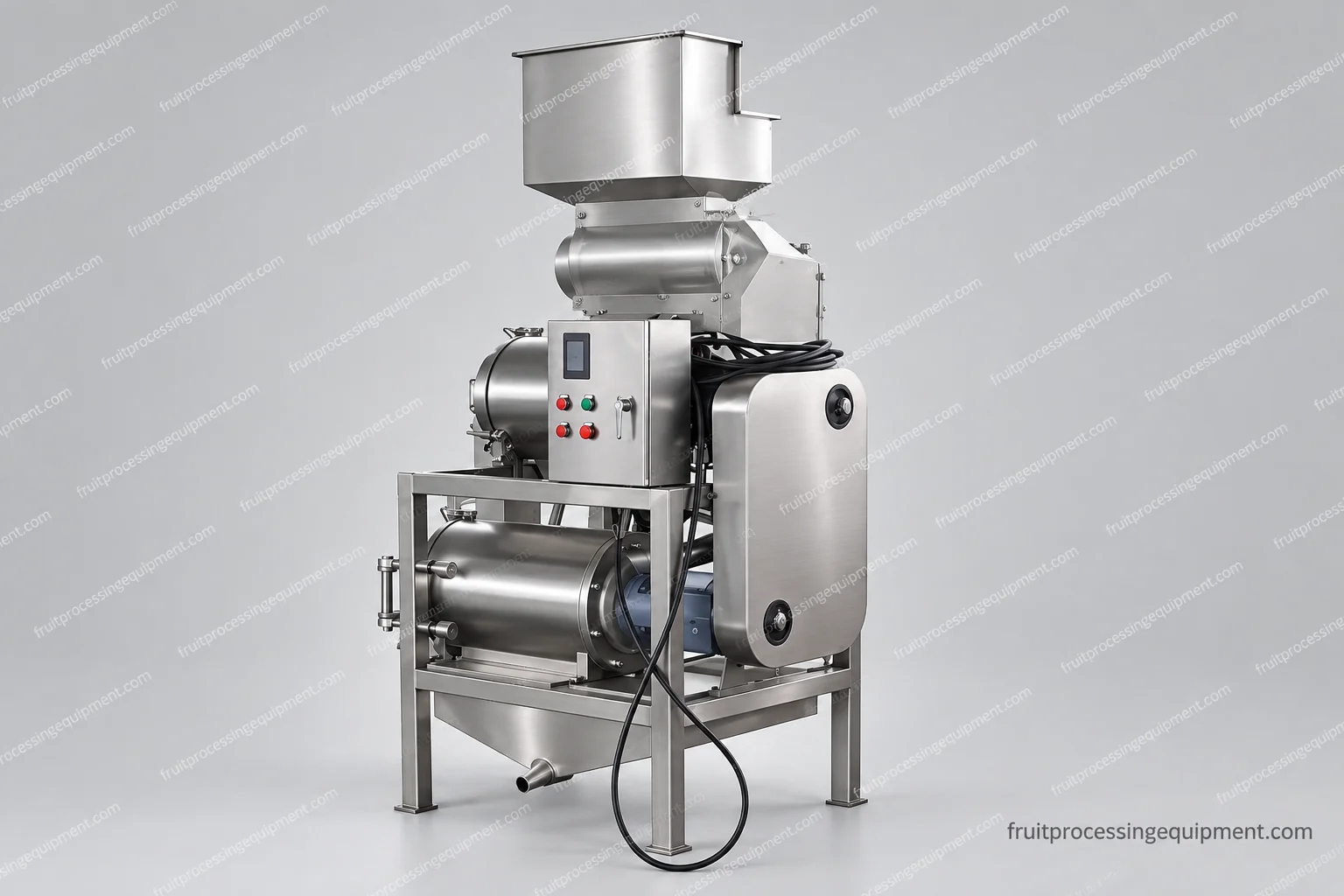
Size & destone
A compact hopper-fed recovery assembly with separate processing housings and product discharge for selected stone-bearing fruit.
Fruit-specific flesh separation and recovery
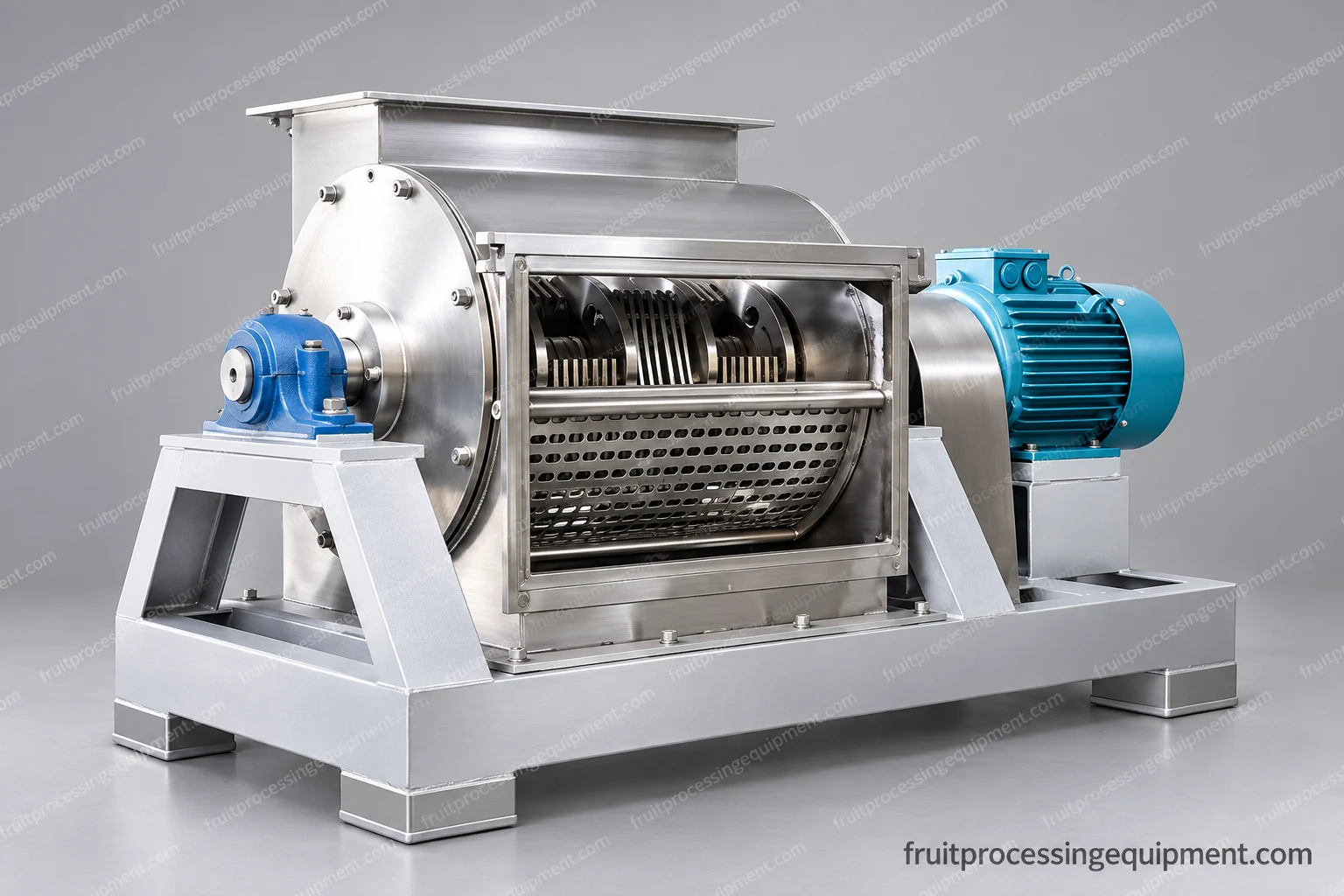
Size & destone
A hopper-fed rotor machine that breaks prepared fruit into mash for pulping or juice recovery.
Driven rotor inside an accessible crushing chamber
Recover pulp & juice
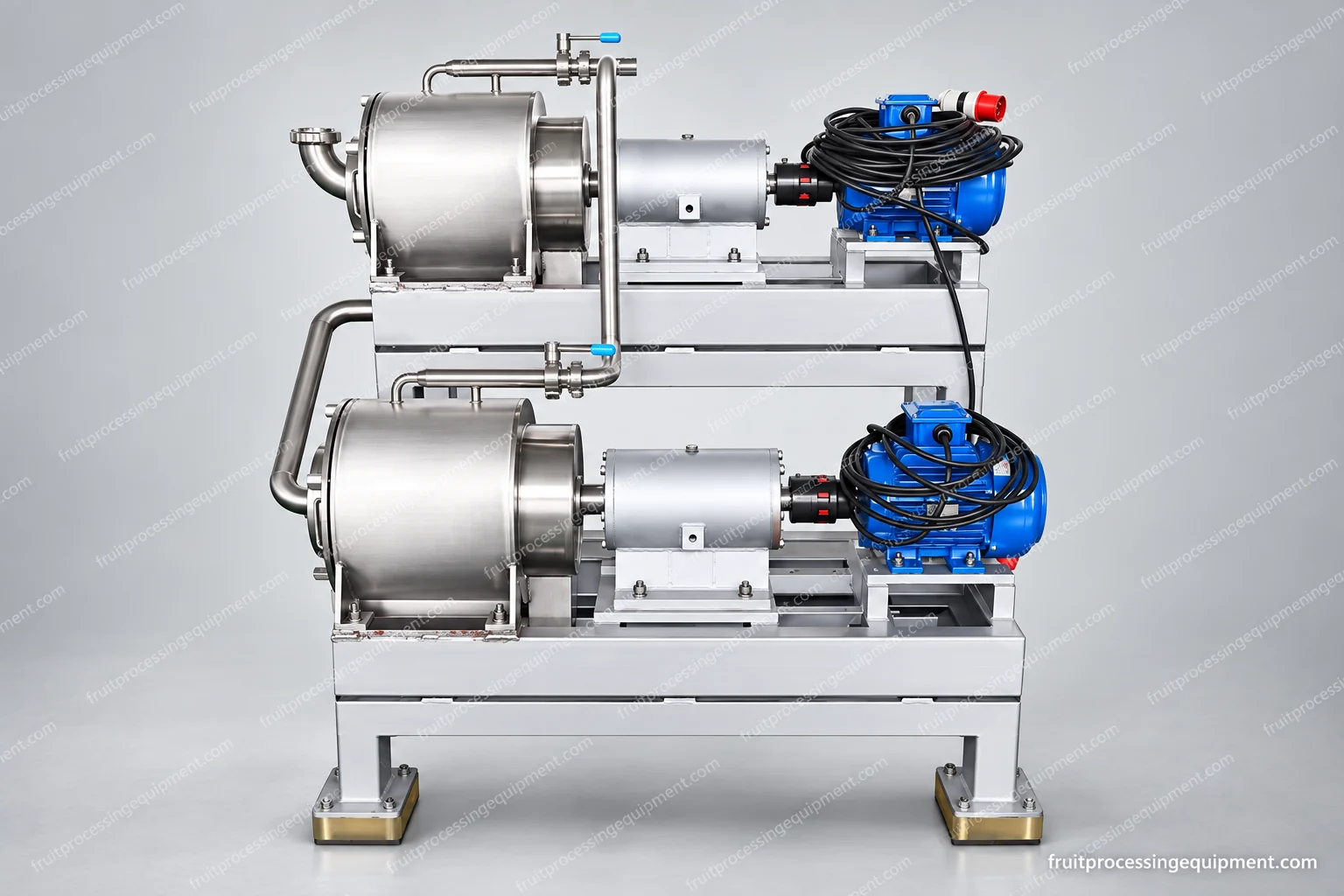
Two separately driven screening stages combine pulp recovery and finer finishing on one supporting frame.
Sequential rotor-and-screen separation
Finish & clarify
The finer screening stage of a pulping arrangement controls coarse fibre and product texture before transfer and treatment.
Screen finishing within the pulping system
Process configuration
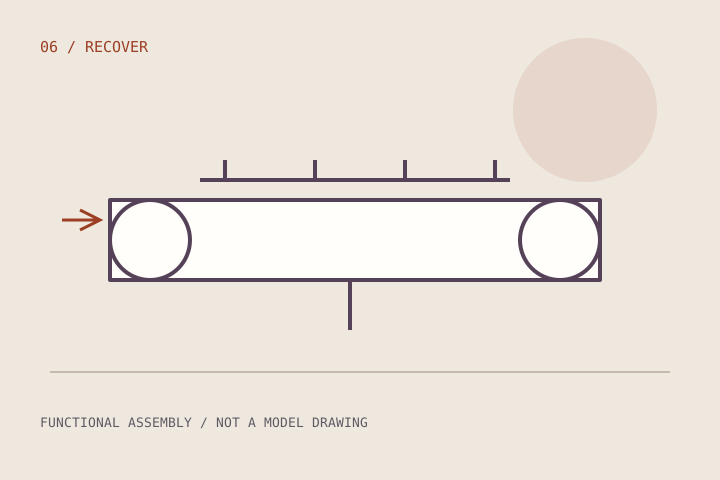
Review sustained mash preparation, belt loading and juice/reject collection as one pressing duty.
Express juice from prepared mash through a belt path
Process configuration
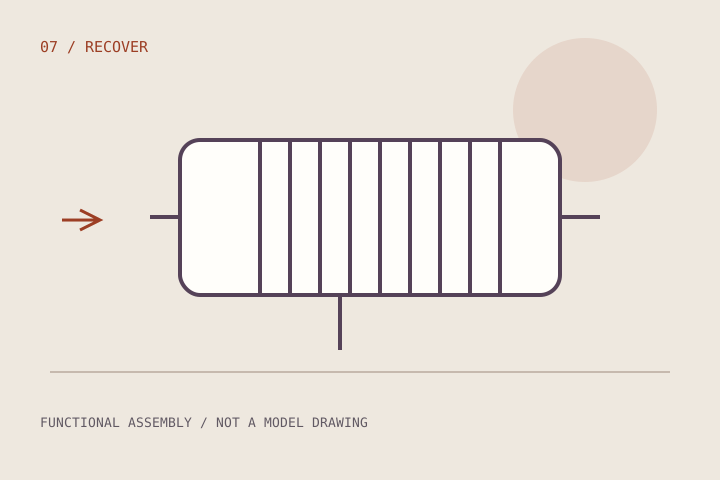
Evaluate the complete load, press, discharge and cleaning cycle for the proposed mash.
Express juice through a defined pressing cycle
Transfer & balance
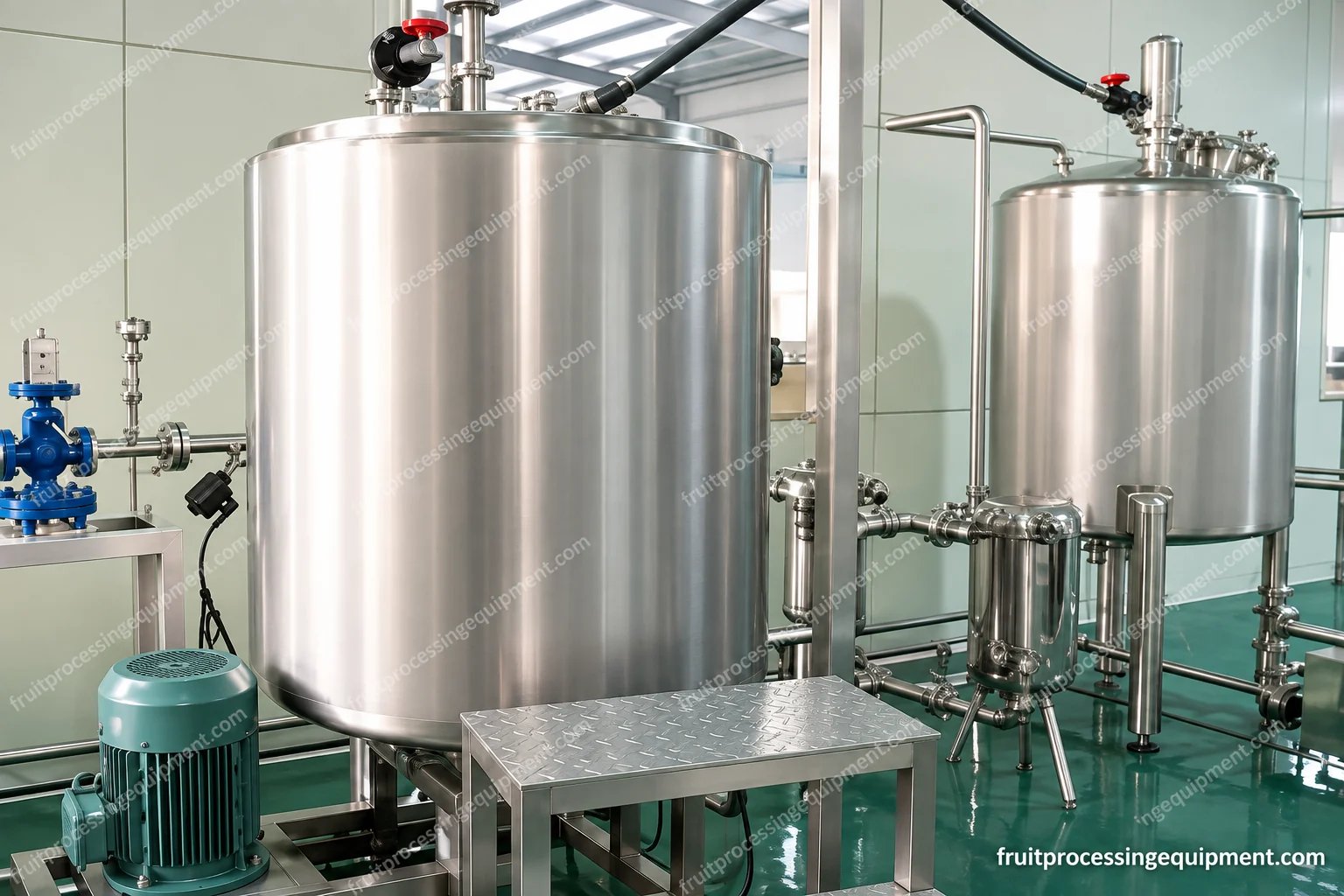
Product vessels, accessible pipe connections and transfer pumps form a controlled buffer between fruit-processing machines.
Product holding and pumped transfer
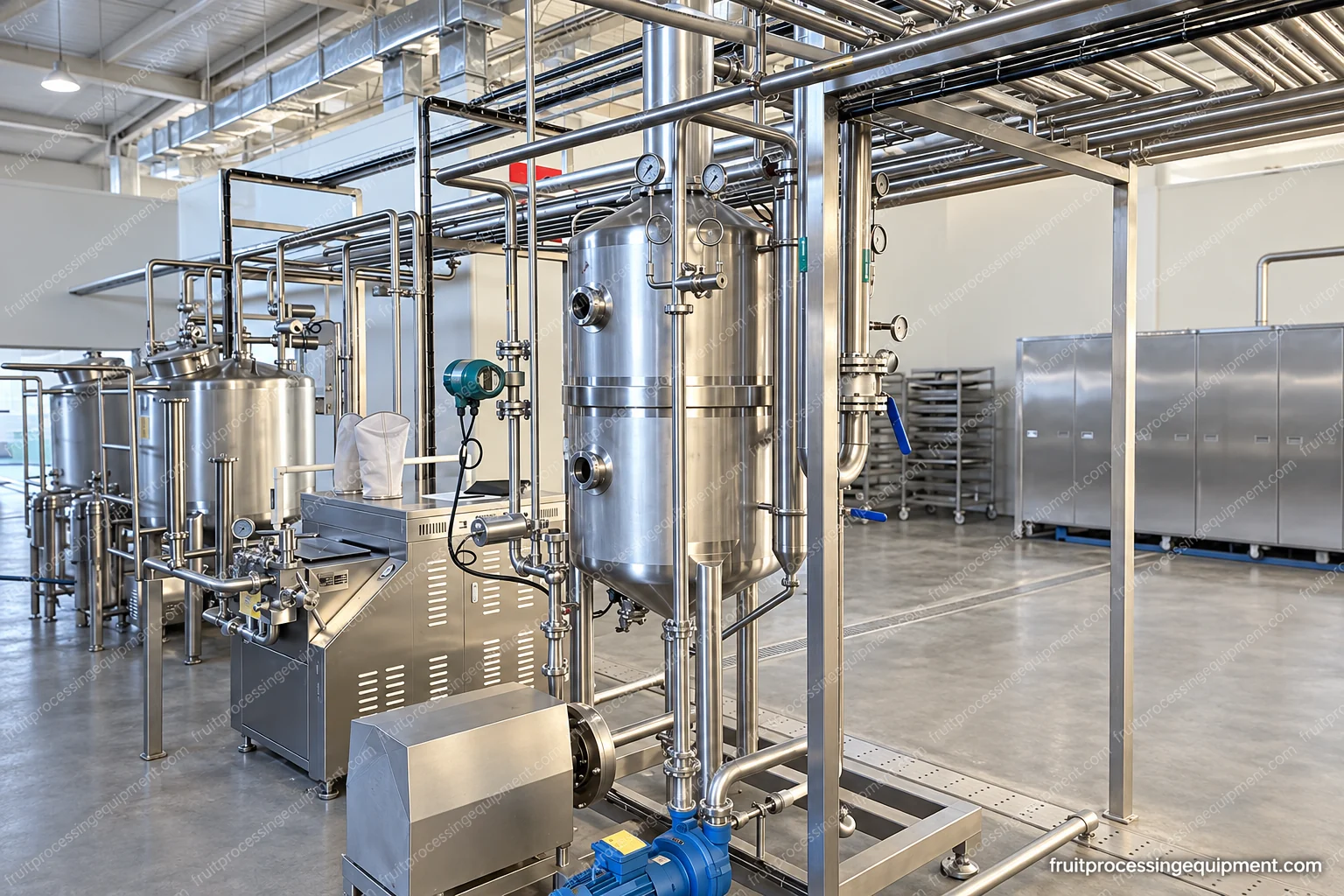
Transfer & balance
A vacuum-vessel assembly with sight windows, connected piping and a discharge pump for managing entrained and dissolved air.
Air release in a vacuum vessel with controlled product transfer
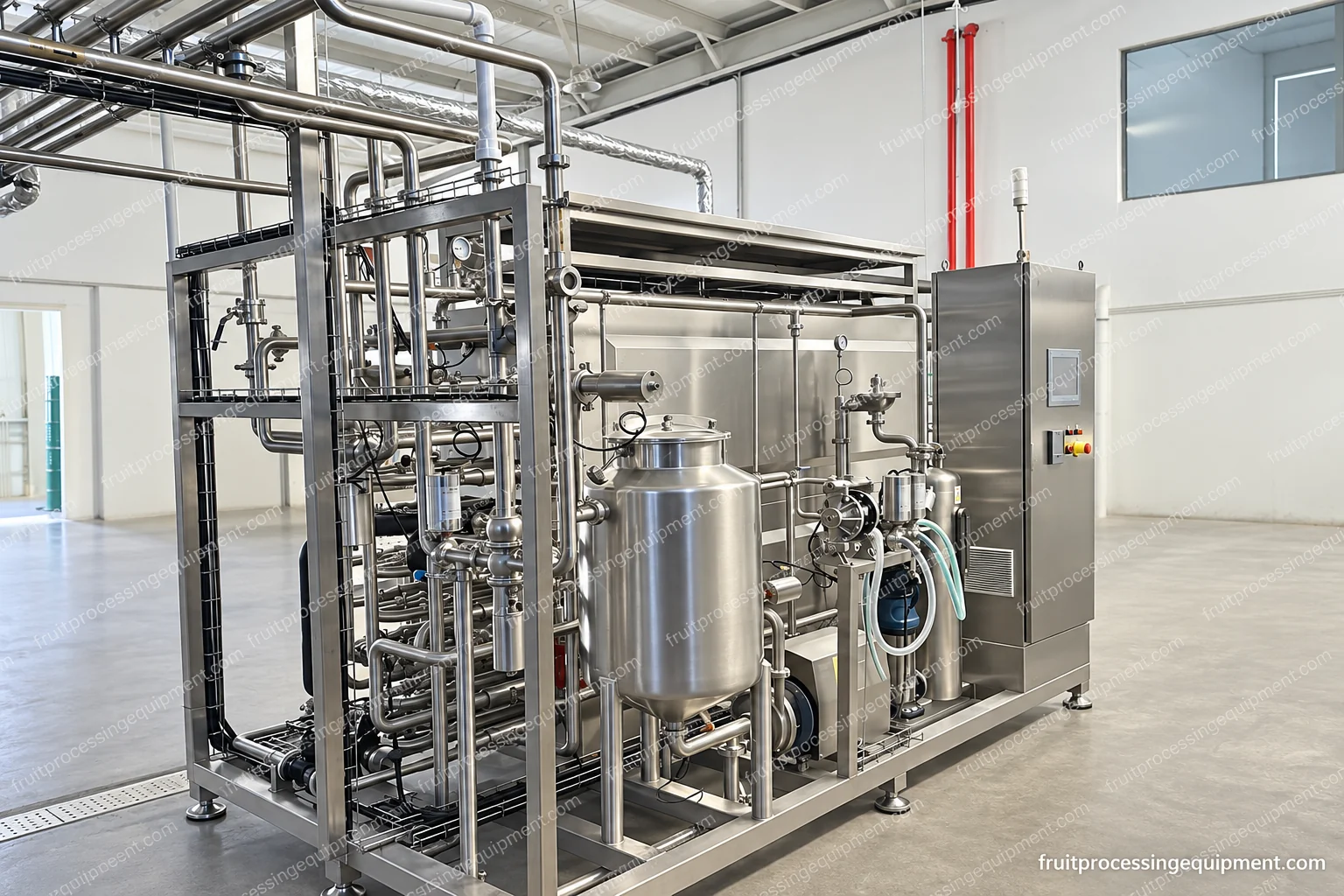
Treat the product
A skid-mounted heating, holding and cooling arrangement with product vessels, tube sections, valves and local controls.
Continuous indirect product heat treatment
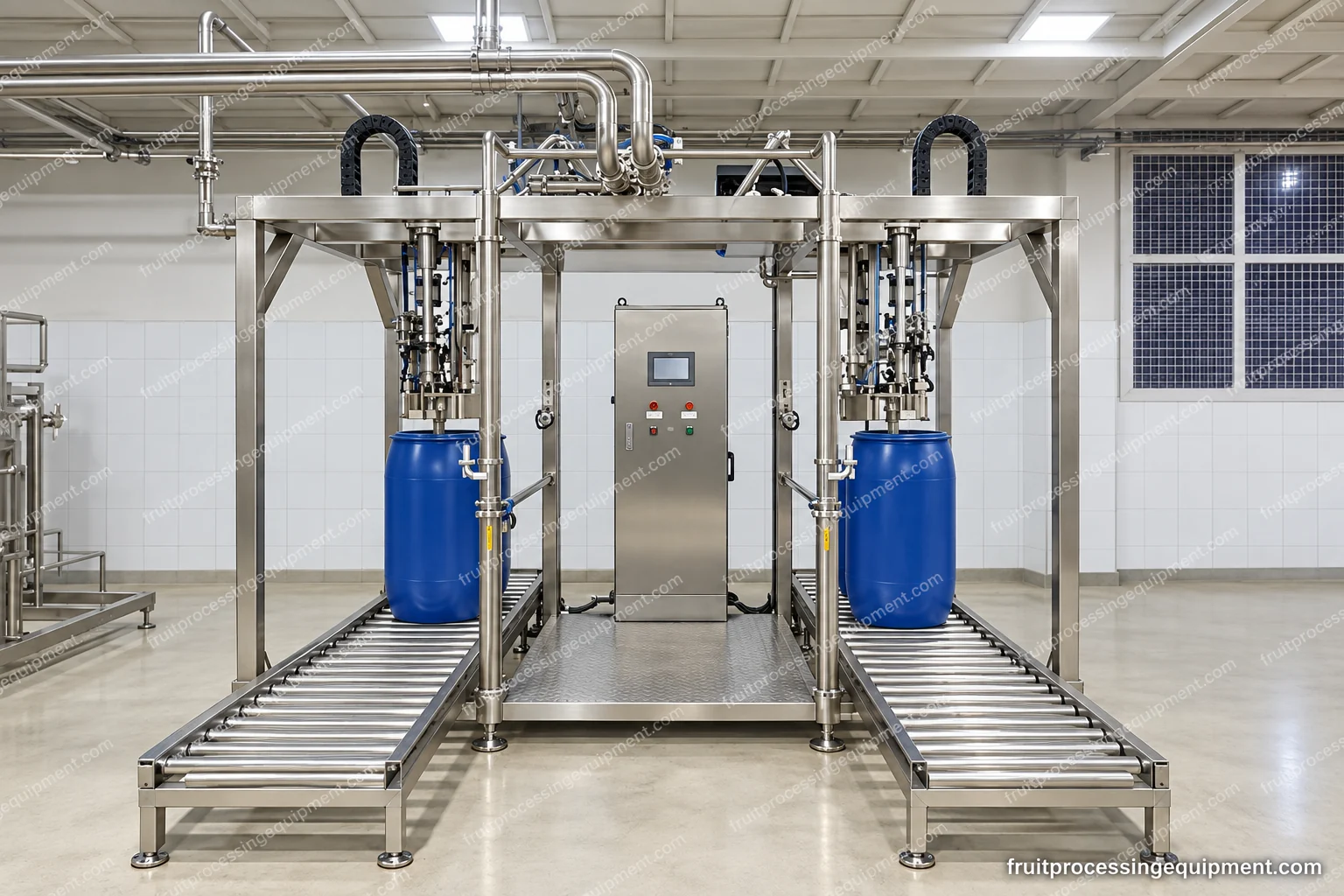
Fill & close
A bag-filling arrangement with guarded filling stations, a central control enclosure and roller conveyors for supported bags in drums.
Controlled product transfer through a compatible bag fitment
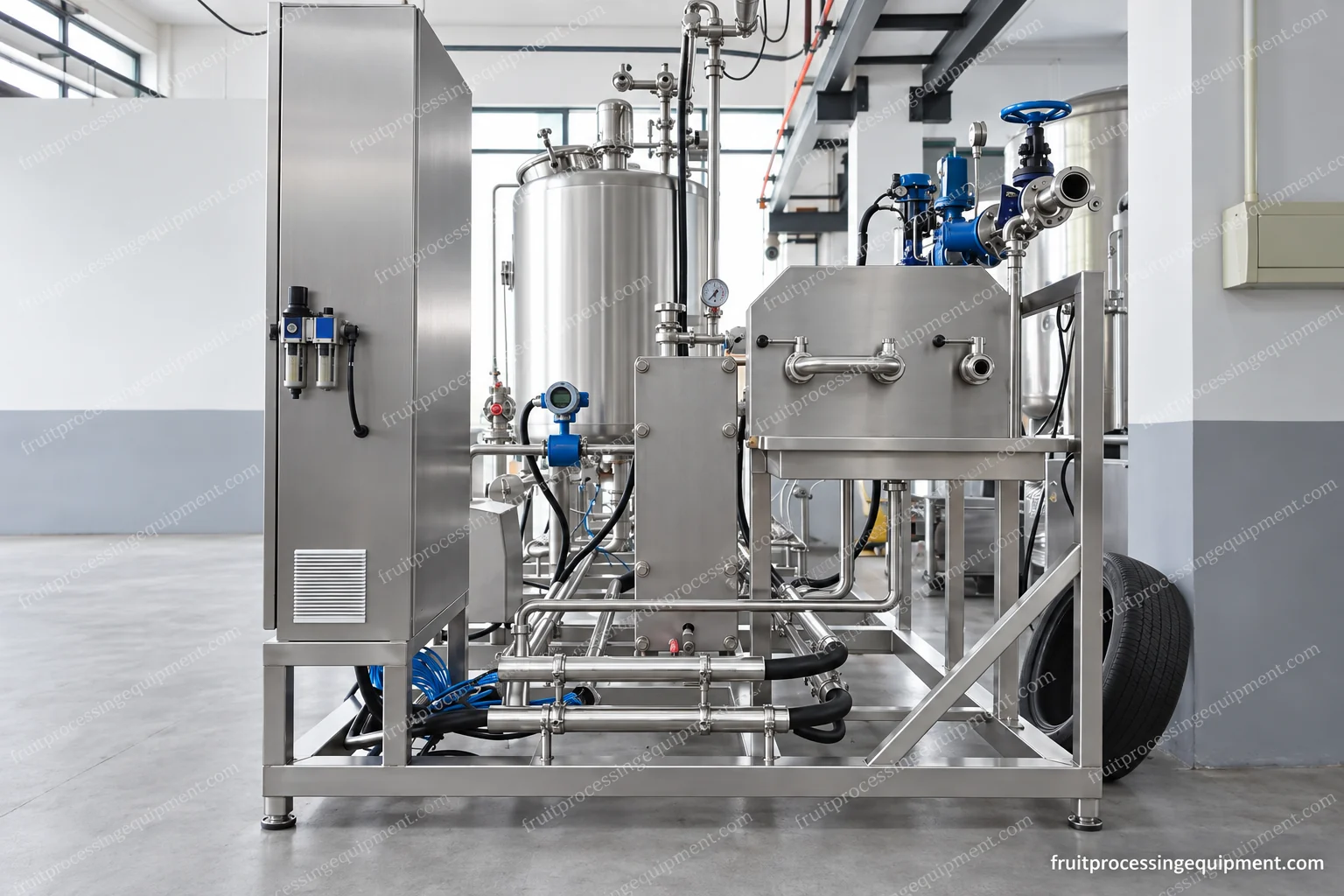
Clean equipment
A cleaning-service assembly with a vessel, pump, heater, valve connections and instruments for defined closed product circuits.
Circulating cleaning services through a selected supply and return path
Selection inputs
Selection guides for this fruit
Connected process routes
Equipment combination
Build a pulp route around fruit preparation, two-stage recovery, controlled transfer and treatment that preserves the intended texture.
Explore the equipment route →Equipment combination
Combine fruit preparation and the right recovery method with clarification, air control and product treatment where the juice specification requires them.
Explore the equipment route →Equipment combination
Connect evaporation, concentrate handling, thermal processing and bag filling around a defined feed and finished-product specification.
Explore the equipment route →Fruit questions
Peach · Apricot · Plum · Cherry · Nectarine. The family is a starting point: variety, maturity and the condition entering the machine still need to be stated.
Destoning is a separate mechanical duty from crushing. The proposed assembly must show how flesh is recovered and how stones and fragments leave the product path. Manual trimming or peeling remains a different operation. Pulping is often reviewed where edible flesh belongs in the product; pressing can be reviewed for a juice route after the preparation boundary. Compare the actual wanted fraction and reject quality, not a fruit-name match.
Fruit variety, maturity, stone adhesion and flesh firmness; Destoning, halving, peeling or trimming already performed upstream; Wanted product and the permitted stone-fragment or peel carryover; Product and reject collection, plus the inspection method; Rate basis and the downstream treatment or filling condition. The likely equipment duties can then be reviewed against the actual product and supply boundary.
One fruit, one machine or a connected section
Start with the fruit, its condition and the product. Existing equipment, a required rate and package details can be added when available.
Other fruit families