Inside the process
How this equipment works
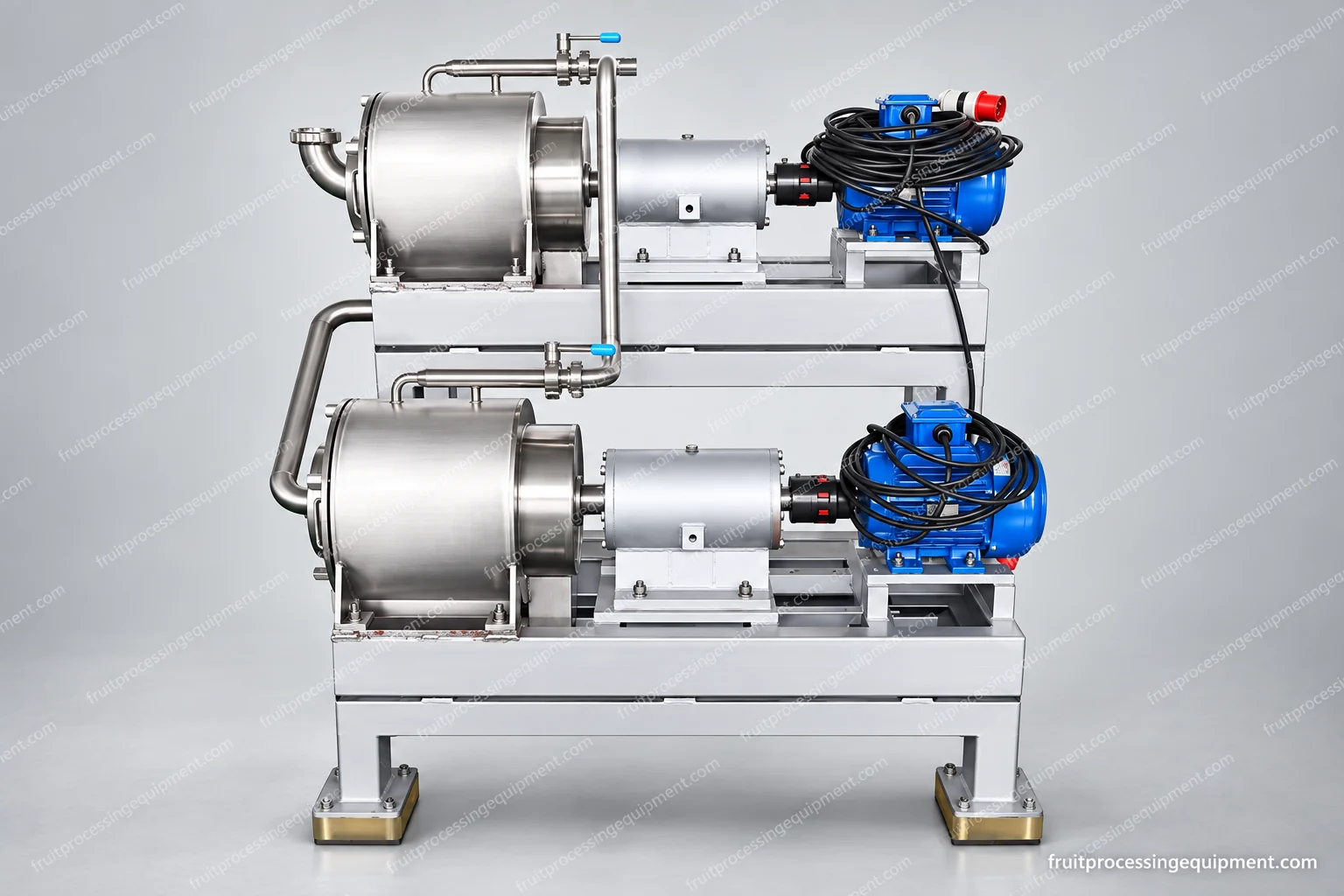
A finishing stage takes recovered pulp from the preceding recovery operation and separates the wanted edible stream from remaining coarse material. In the illustrated two-stage machine, the second cylinder performs this role. It is part of that connected assembly, rather than a second machine inferred from the same photograph.
Texture control
The screen, rotor setting and incoming pulp condition work together. The specification should describe acceptable retained particles and fibres, not just a nominal screen opening.
A connected second stage
The first and second stages need compatible flow and reject collection. A restrictive final screen can limit the whole recovery assembly even when the primary stage has spare capacity.
Configuration and operating basis
Position
After primary pulp recovery
Shown configuration
Lower stage of the two-stage pulper
Product target
Controlled pulp texture and coarse-fraction removal
The offered model and its installed options define final dimensions, services and rated duty.
Product and operating conditions
Coarse finishing is not automatically clear-juice clarification or a microbial removal claim.
Connections and installation
Define inlet consistency and pressure, product/reject collection and cleaning returns without cross-contamination.
Cleaning and service access
Inspect screen condition, seals and rotor clearance according to the supplied design; arrange safe removal and cleaning.
Selection and comparison
Compare equivalent finishing assemblies on a matched feed and retained-fraction specification. Clarifiers are a different task.
Compare equipment functions →