Inside the process
How this equipment works
The feed gains heat in the exchange section and releases water vapour under the selected operating pressure. Vapour is separated from the concentrate and handled by the condensing and vacuum system. The product path and circulation arrangement control residence, wetting and exposure to heat.
Equipment structure
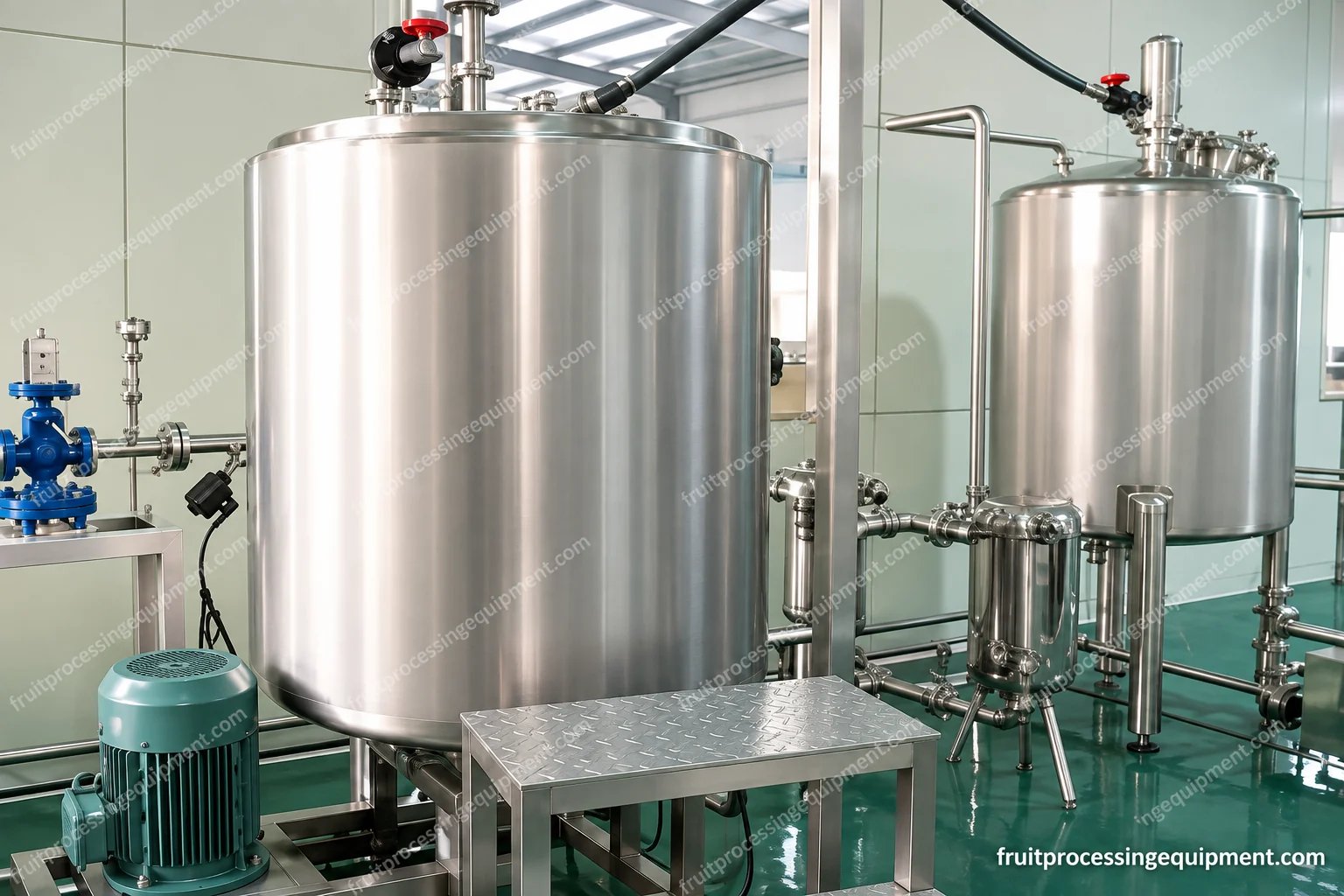
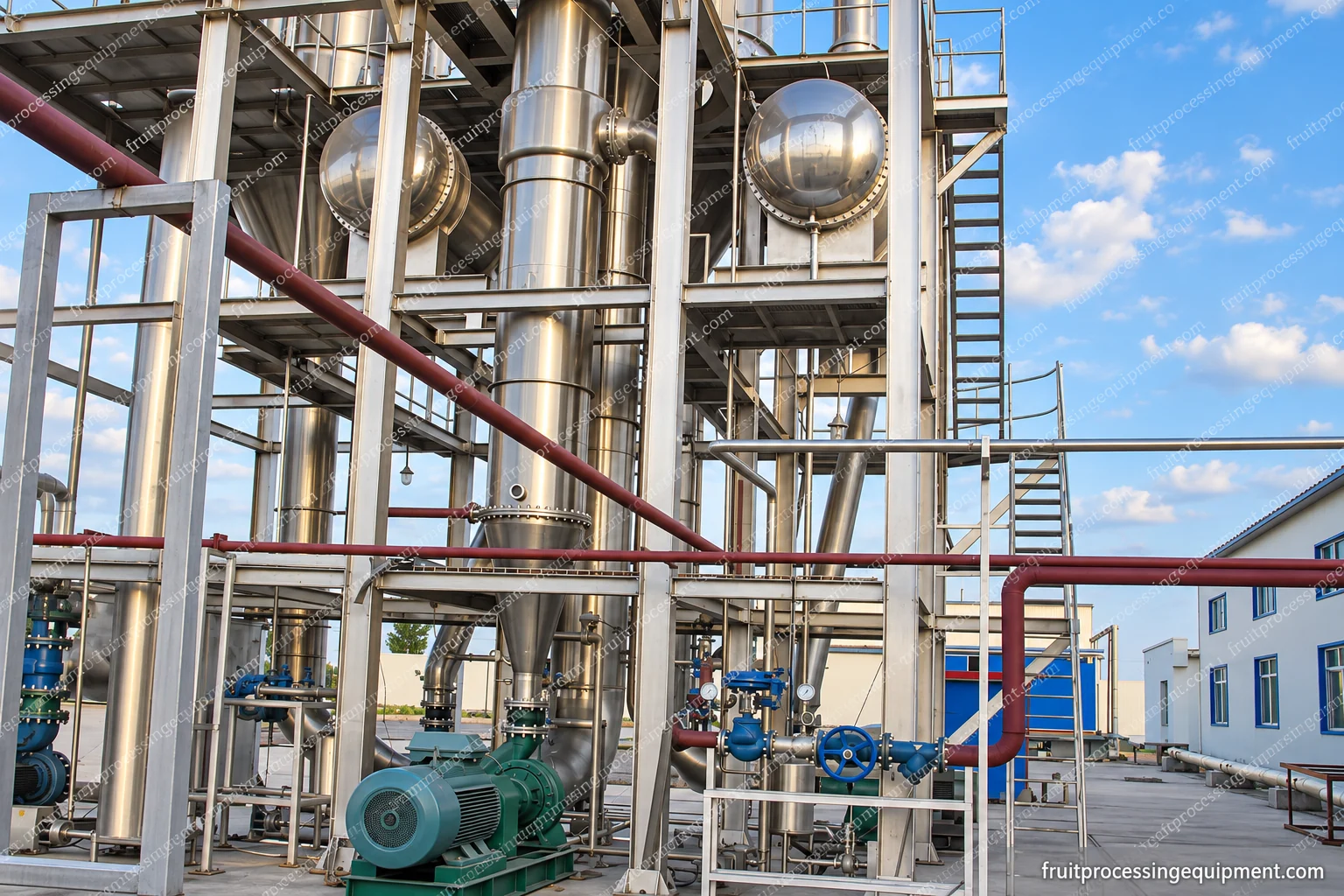
The shown arrangement includes vertical vessels, connecting pipework, pumps and a supporting structure with service access. The image establishes those physical components; the final heat-transfer and circulation drawing defines how they are used for the chosen feed.
Selecting the evaporation path
A flowing juice and a viscous puree place different demands on distribution and circulation. Falling-film and forced-circulation arrangements are compared by feed behaviour, fouling and product residence. The chosen exchanger and pump configuration must suit the measured material.
A three-stream duty
State feed quantity and solids, concentrate quantity and target solids, and evaporated water separately. Raw fruit intake is an upstream basis. Concentration does not turn a dilute or reconstituted formulation into not-from-concentrate juice.
Configuration and operating basis
Visible system components
Vertical vessels, product pumps, pipework and access structure
Catalogue system options
Single-, double- and multiple-effect configurations
Duty basis
Feed and concentrate mass balance with evaporated water
Process selection
Product circulation, heat-transfer and vapour-handling arrangement
Utilities
Heating, cooling, vacuum and cleaning interfaces defined per system
The offered model and its installed options define final dimensions, services and rated duty.
Product and operating conditions
The pictured system does not establish one evaporation rate or one architecture for every fruit. Thermal exposure and final quality remain product-specific.
Connections and installation
Define feed conditioning, concentrate discharge, vapour/condensate handling, heating, cooling and cleaning interfaces.
Cleaning and service access
Consider fouling inspection, access, safe vacuum/pressure isolation and product removal before cleaning.
Selection and comparison
Compare offered concentration systems only on a common feed/product and utility boundary; never equate feed L/h with water kg/h.
Compare equipment functions →