Inside the process
How this equipment works
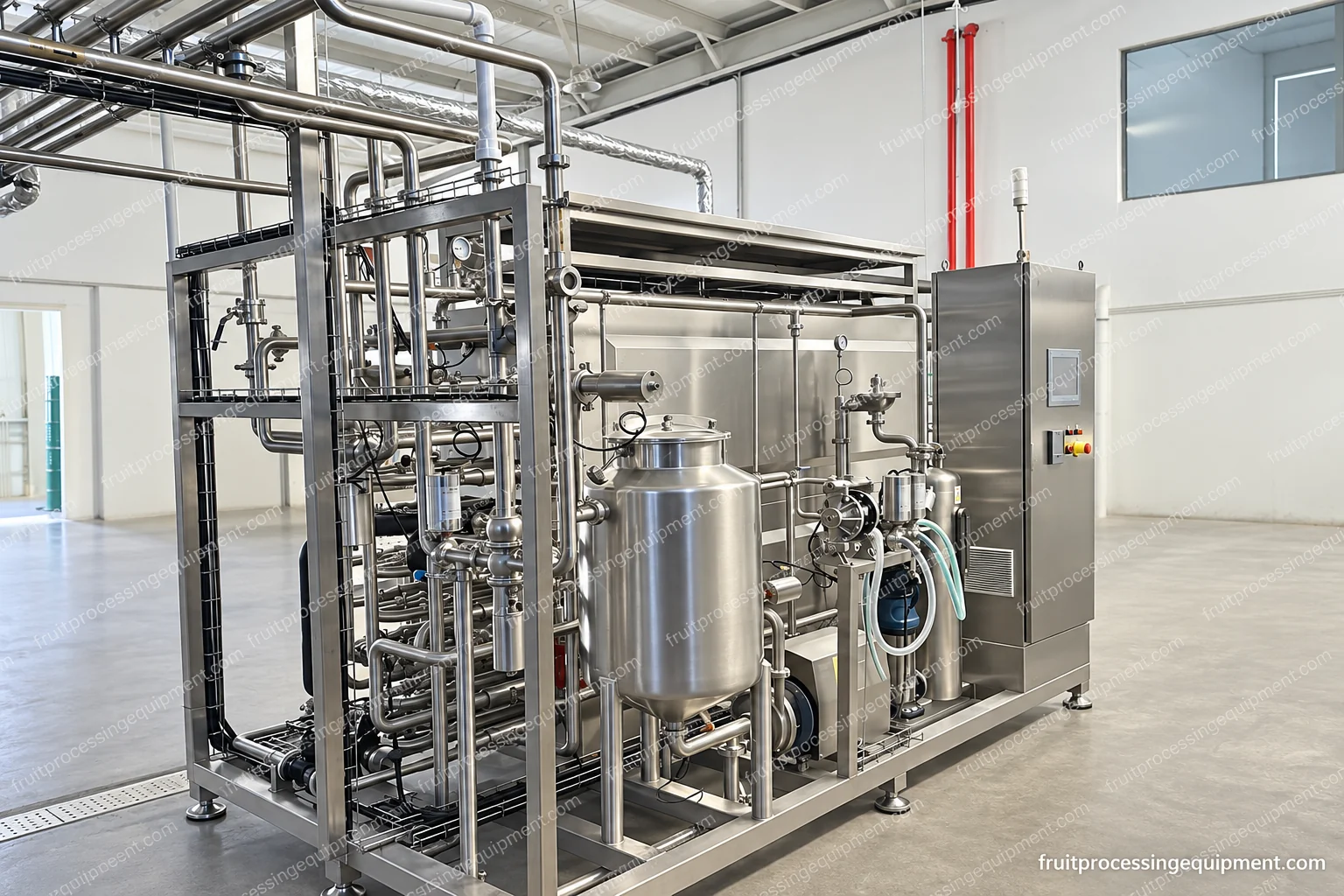
The skid prepares and circulates cleaning services through the connected product circuit. The pump provides circulation and the heating section adjusts the service condition where required. Return flow, drainage and valve routing complete the circuit; the supply skid alone cannot reach an isolated branch or a dismantled part.
Skid components
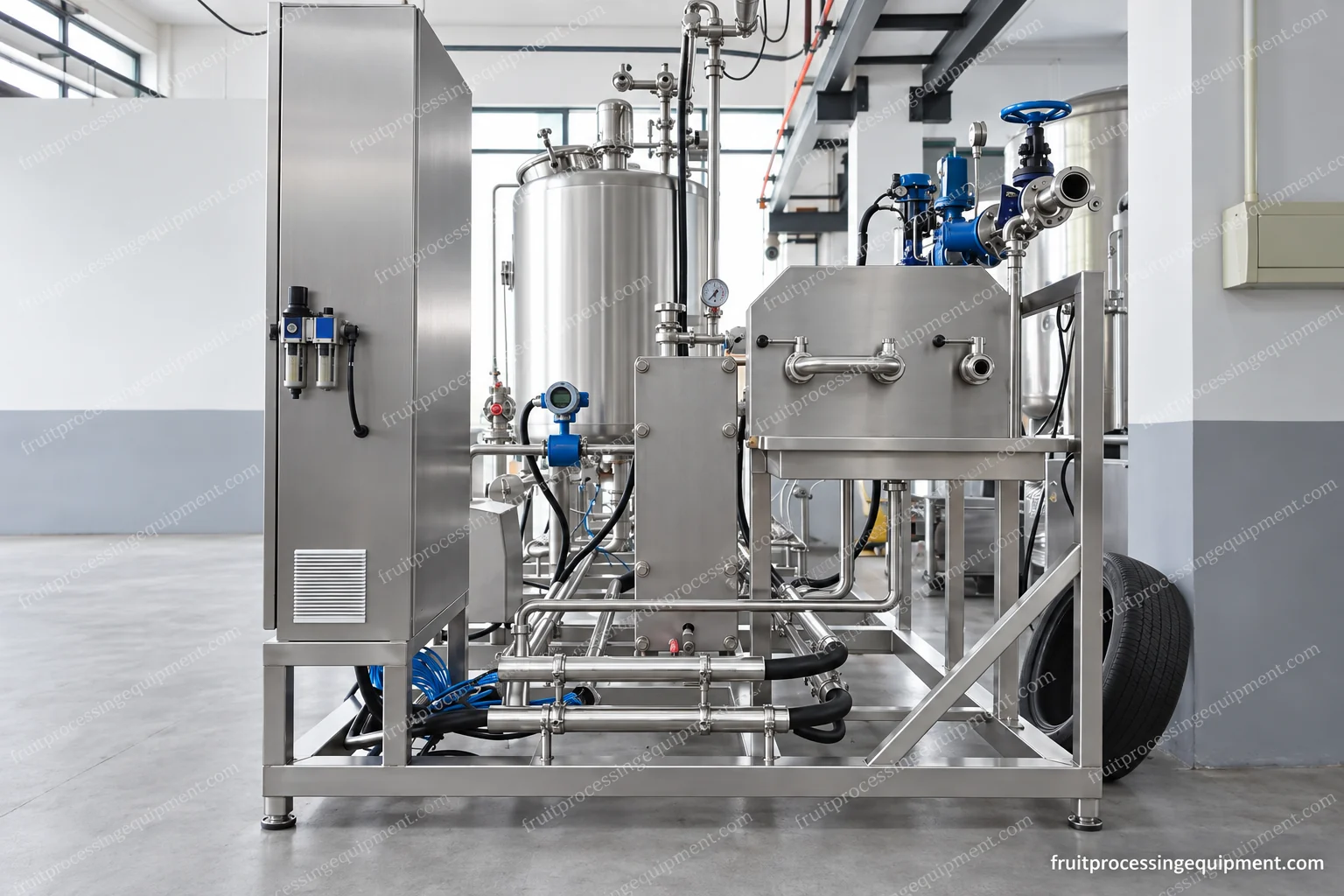
The source view shows a service vessel, a plate heat exchanger, pump and valve pipework beside a control enclosure. These are cleaning-service components: the plate exchanger shown here is not evidence of a separate fruit-product pasteurizer.
Circuits and returns
Name each tank, tube section and filling line in the cleaning matrix. Different circuits can have different return paths, pressure limits and retained volumes. The sequence must prevent unintended connections between product, cleaning solution and drains.
Open preparation equipment
Brush washers, conveyors and exposed crushing parts include open surfaces and debris traps. Their cleaning and isolated inspection remain separate from a closed thermal or filling circuit, even when a shared water supply is available.
Configuration and operating basis
Visible service components
Vessel, circulation pump, heater, valves and instruments
Catalogue tank options
Water, alkali, acid and recovery services as selected
Heating and controls
Steam or electric heating and PLC control within the selected configuration
Application
Defined closed product circuits with a return path
System integration
Circuit selection, safe isolation, return and drain routing
Separate tasks
Manual/open-equipment cleaning and removable parts
The offered model and its installed options define final dimensions, services and rated duty.
Product and operating conditions
The catalogue capacity filter indicates a service-flow basis here, not fruit-production capacity. No universal cleaning recipe or hygienic guarantee is provided.
Connections and installation
Define supply/return connections, drain segregation, utilities, controls and the responsibility for cleaning verification.
Cleaning and service access
Inspect instruments, tanks, valves and seals with safe chemical/pressure isolation. Verify the skid’s own drainability and cleaning.
Selection and comparison
Compare cleaning offers using the same circuits and service conditions; production flow and CIP flow must never be treated as equivalent.
Compare equipment functions →